The Artist Files: Emily Simpson
Posted by Bisley Store on May 21st 2026
The Artist Files looks inside the studios and systems behind working artists today. This chapter features Brooklyn-based artist Emily Simpson, in conversation about craft, process, and the meditative work of the hand. Presented courtesy of Emily Simpson/Chain Smoke NYC.
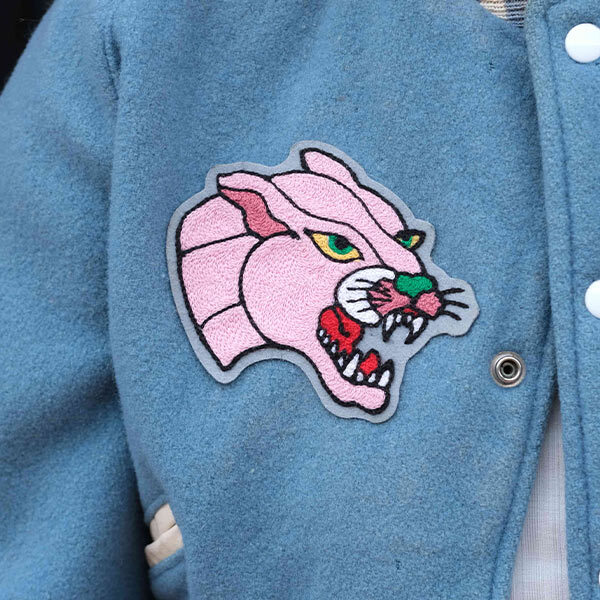
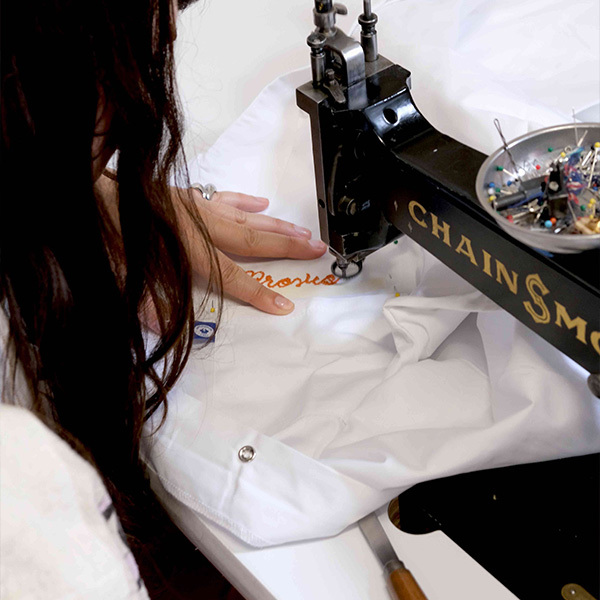
Emily Simpson grew up watching her grandmother sew. Not as a lesson, exactly — more as a fact of the household. The machine was there, the work was happening, and the association settled in early: sewing was something a person could do. That early familiarity would find its outlet in a practice built around one of the oldest and most specific methods in textile craft. Chain Smoke, her Brooklyn-based embroidery studio, runs on vintage cast-iron machines, hand-cranked and slow, producing work ranging from a single monogram to a fully embellished suit jacket. The throughline is always the stitch itself.
Chainstitch is a method as much as it is a look. Where most machine embroidery is produced digitally — designs fed into a computerized system, executed automatically — chainstitch is worked by hand crank, one loop locking into the next in a continuous chain. The result has a raised, rounded quality that sits differently on fabric than standard embroidery.
Simpson came to the practice in 2018, after a trip to Texas sparked an interest in the chainstitch embroidery found on western suits and shirting. She taught herself the machine mechanics from scratch, and what started as a creative pastime quickly outgrew that frame. Within a few years, she was taking on brand work alongside personal commissions, building a client list that now includes Levi's, Converse, Nike, and Barbour. A New York Times feature earlier this year traced chainstitch's current revival, with Chain Smoke as the center.
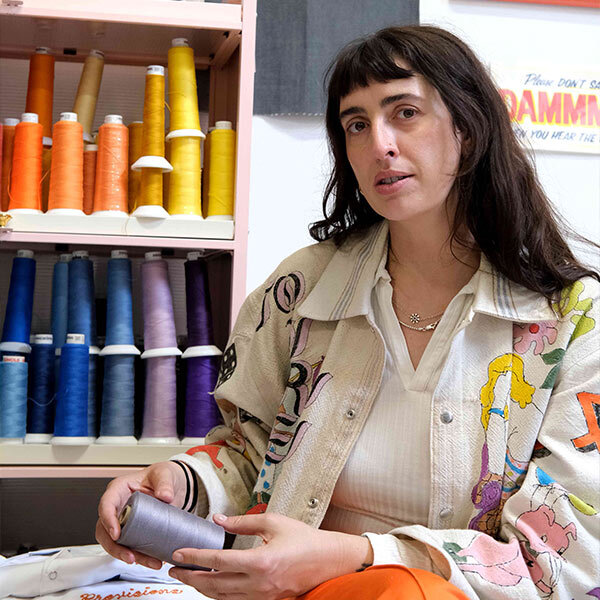
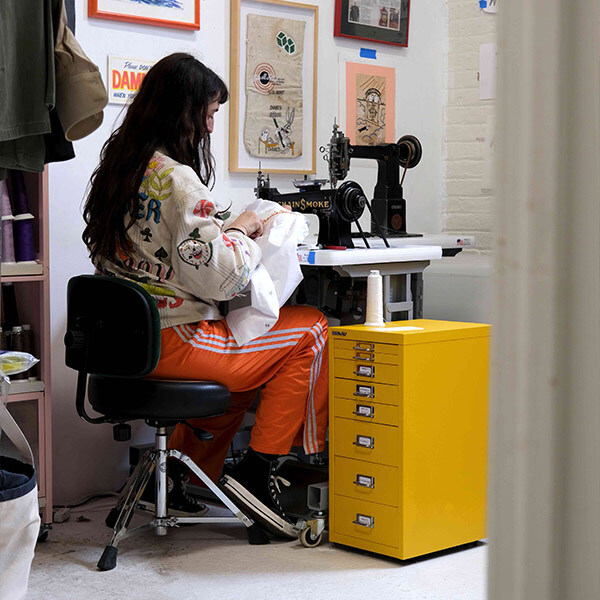
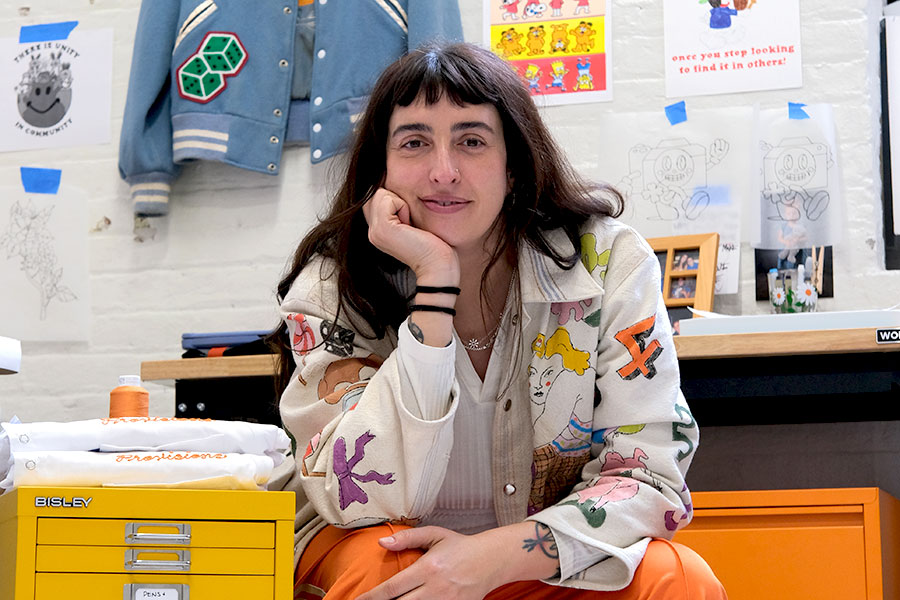
Her South Slope studio is where the two sides of the practice coexist. Mornings tend toward the administrative and creative: client correspondence, pattern work, flash drawings — the design sheets that show clients what their options look like before a stitch is placed. Afternoons shift to production. "I usually try to reserve between noon and six for sewing production time," she says. "That's really the max your body will allow you to sew in a day anyway."
The variety is something she values. A single day might move from finalizing artwork for a brand pop-up in the morning to stitching monograms onto a batch of shirts in the afternoon to working fills (dense, thread-packed sections that cover large areas of fabric in solid color) into a more elaborate jacket by early evening.
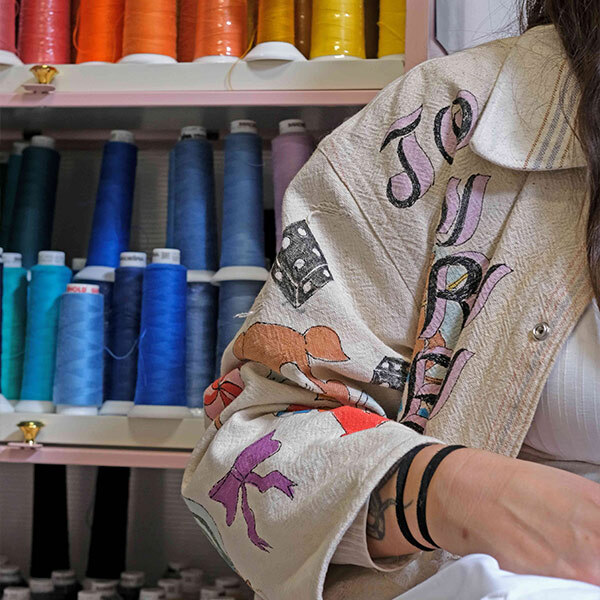
Custom jackets are the most common request — crew jackets, workwear, or team pieces built around a shared identity. The work also extends to jumpsuits, tailored suits, and objects that aren't apparel at all, made more as art pieces than garments. Simpson describes her aesthetic as maximalist, pulling from vintage workwear, 70s-90s fashion, tattoo culture, soccer culture, and literature. The work reflects all of it, recombined into something distinctly hers.
Because chainstitch sits outside most people's everyday experience, a significant part of Simpson's work is simply explanation. "People will say, oh, I was thinking about getting embroidery, but I'm going to get chainstitch," she says, "and I'll explain that chainstitch is actually just a type of embroidery. It's the way the stitches look and a method for applying them to fabric." She's patient about it. Initial communications often include a few sentences of background — the hand-cranked nature of the machine, what the stitch looks like, or expectations in terms of cost and texture compared to computerized work. The goal is alignment before anything begins. Chainstitch has its own logic, its own strengths and limitations, and she'd rather establish that early than correct a misunderstanding later.
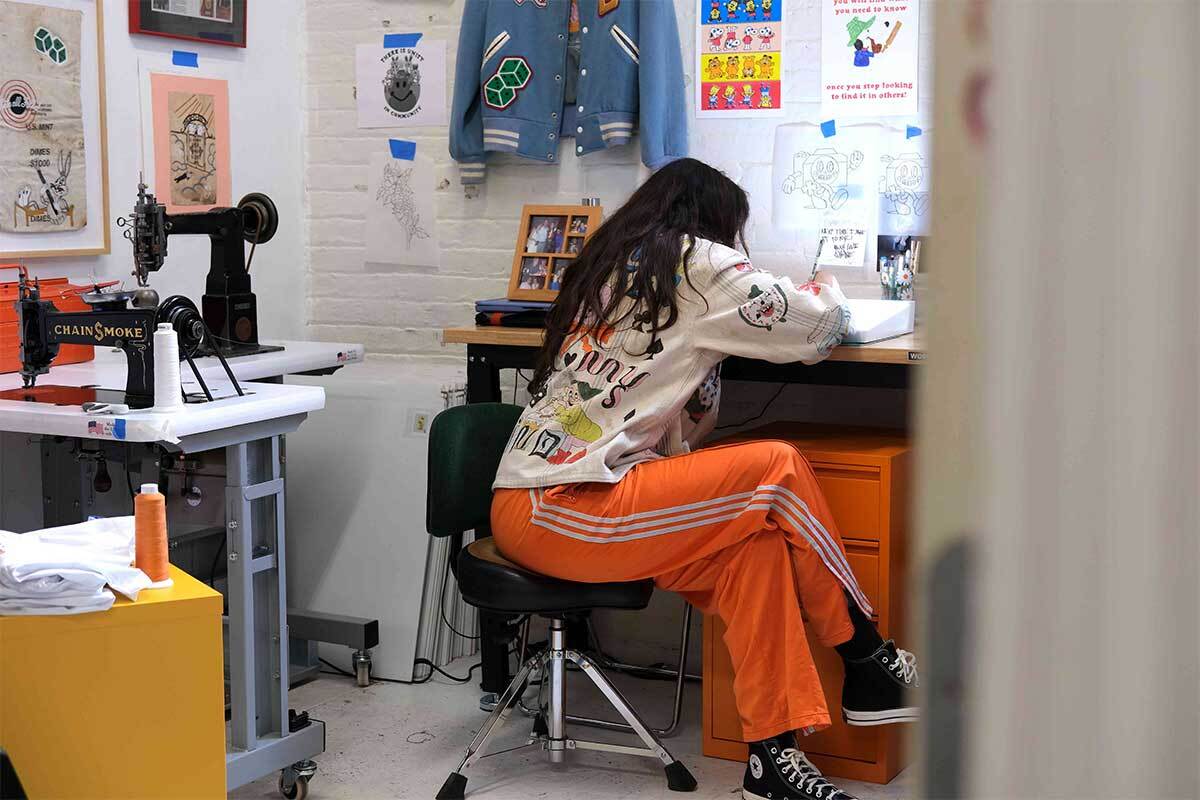
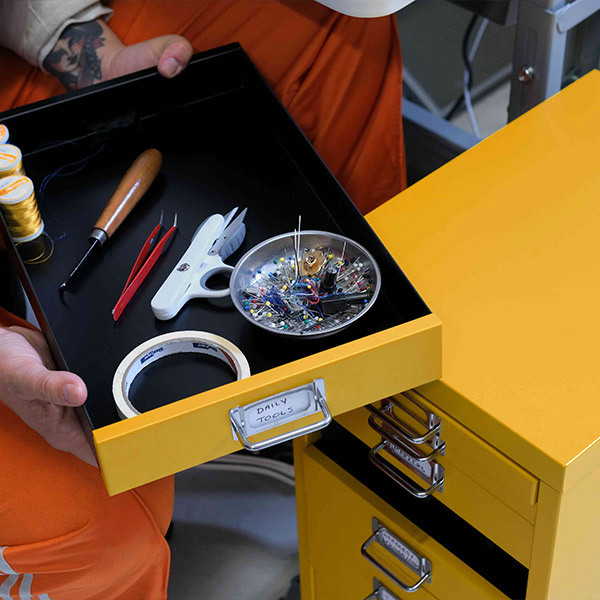
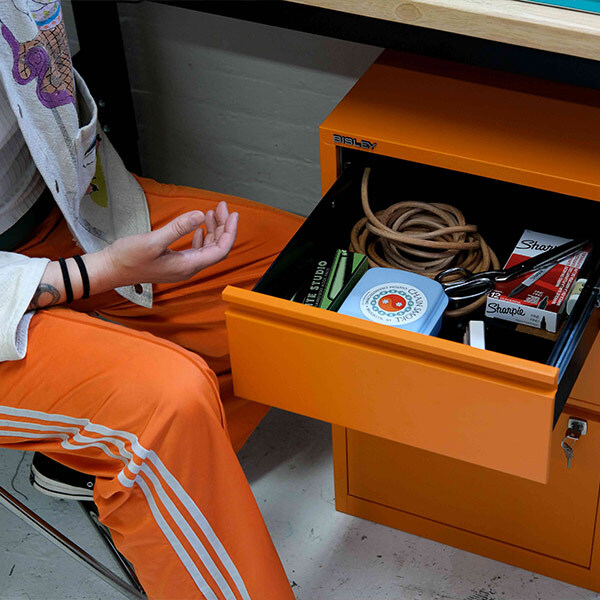
Organization in the studio follows a similar philosophy: set things up so the work can move without interruption. The studio itself is divided into clear zones: pieces waiting to be stitched in one place, consumable supplies in another, tools in their own designated home.
She wasn't always this way. "I was always the kid with the messy desk at school," she says. Organization came with adulthood, and then with running a business, and then with something more deliberate — an interest in how the arrangement of objects affects how you feel in a space. "Having a settled mind is a great place to start for organization," she says. "And having that mindfulness ripple out into your physical space is very helpful." The studio reflects that. It doesn't look like a production floor. It looks like a place someone thinks in.
The craft is having a moment, and Simpson is clear-eyed about why. In an era when automated production is the default, chainstitch is the opposite — slow, human, made through direct contact between a person and a machine. "There is such a heritage," she says. "Over a century of process has gone into developing it as a craft. By choosing to work with chainstitch artists, you're helping to grow this craft into the future."
She pushes back on any narrative that frames it as preservation work — keeping something alive that might otherwise disappear. The revival is real, and it's driven by the same instinct that makes the vintage machines worth seeking out: some things work better when a person's hands are involved.
From a grandmother's sewing room to a South Slope studio, Emily Simpson shows how a practice built on patience and precision can find its own kind of momentum. You can learn more about her work at chainsmokenyc.com. and follow along on Instagram @chainsmoke.nyc.
Emily's Bisley units are key to staying organized.
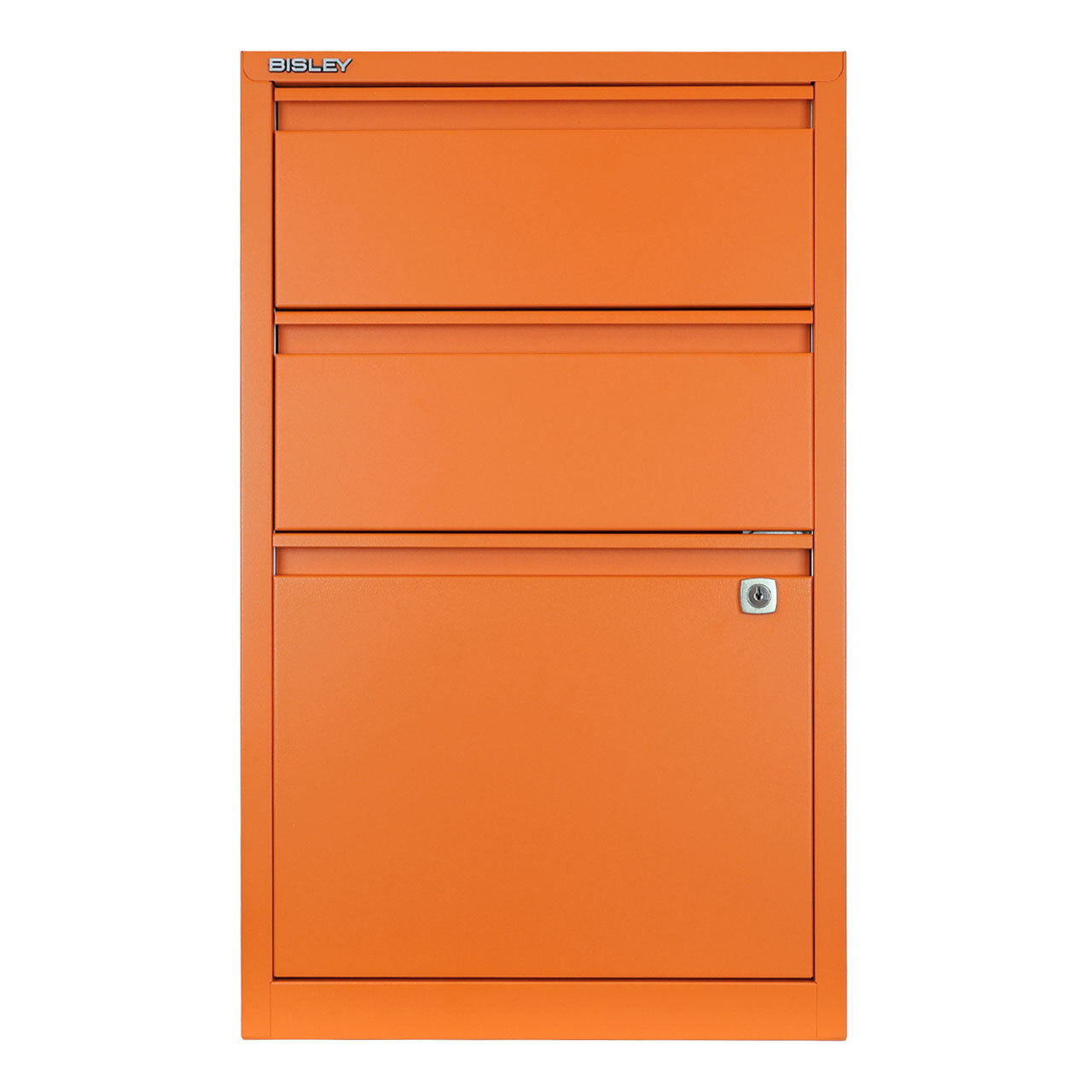
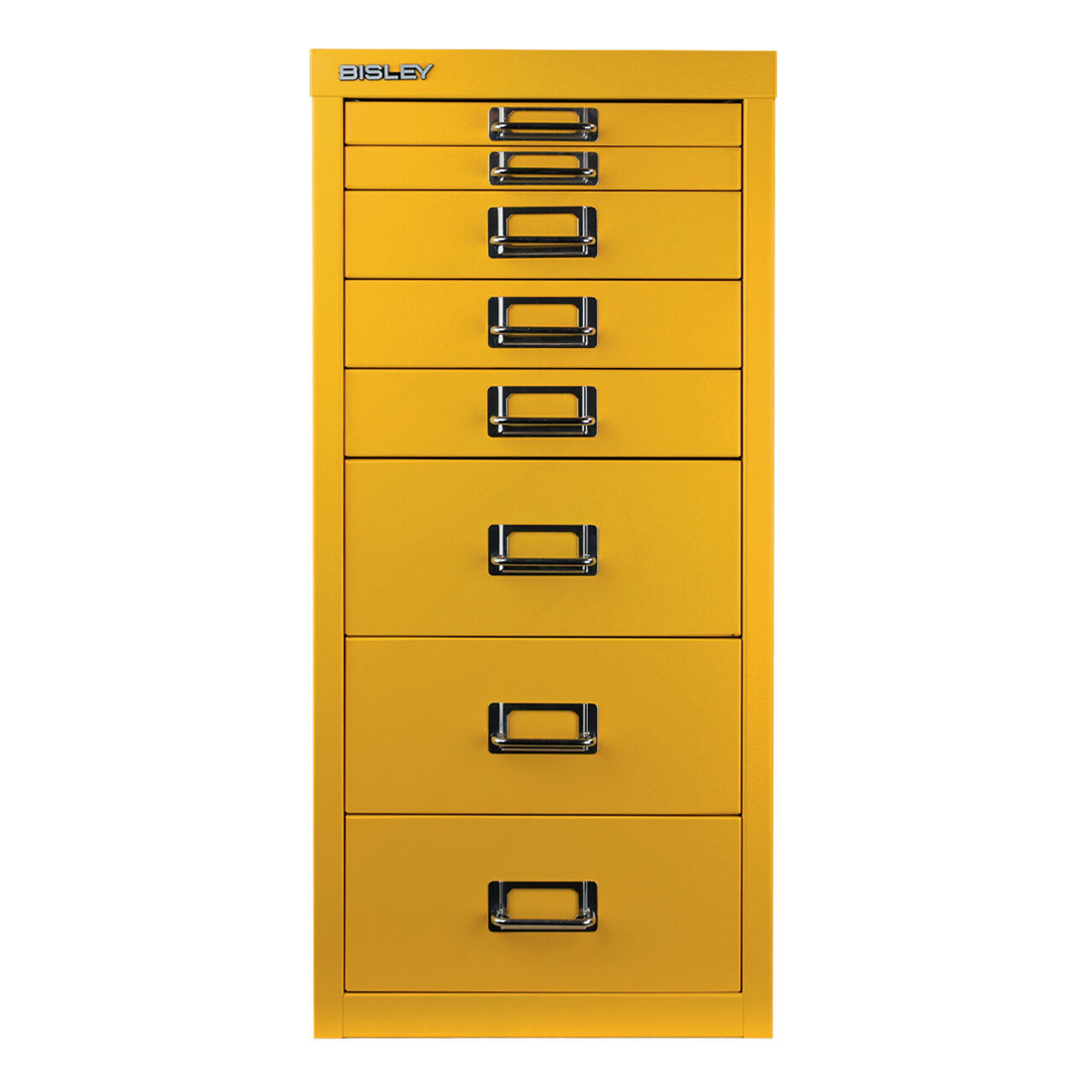
Emily uses an 8-Drawer MultiDrawer in Golden Sunflower Yellow and a 3-Drawer Flush Front File Cabinet in Bisley Orange. The MD8's fully removable drawers keep machine equipment and daily tools exactly where they need to be. The Flush Front holds client designs filed and ready to reference, with space for extra essentials in the top two drawers. The bold colors are a perfect match for the studio!