
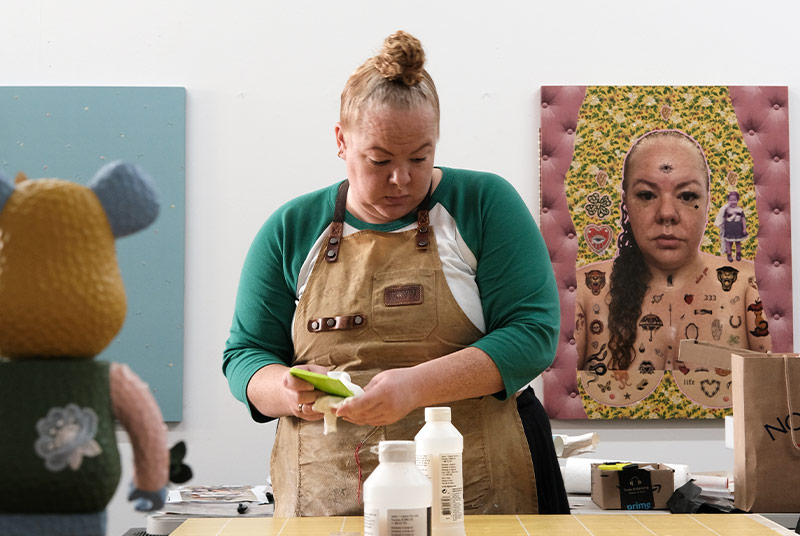
The Artist Files: Genevieve Gaignard
Posted by Bisley Store on Mar 9th 2026
The Artist Files looks inside the studios and systems behind working artists today. This chapter features East Coast-based artist Genevieve Gaignard, in conversation about space, material, and the thin line between living and working. Presented courtesy of Genevieve Gaignard Studio.
Genevieve Gaignard’s work lives in layers of history, identity, image, and material. Working across photography, collage, sculpture, and installation, she builds worlds that feel intimate and theatrical at once, often using vintage props, wallpaper, and found imagery. Her examination of race, femininity, and American culture is informed and inspired by her own biracial experience. Her practice draws power from contrast: humor and discomfort, beauty and critique, past and present. The studio is where those tensions gather and take shape.
Unlike artists who search for the “perfect” workspace, Gaignard doesn’t demand much from a studio at all. Spaces tend to find her, not the other way around. Her most recent studio offered more room than she’s had in years, but with that space comes new challenges — how easily it can turn into storage, how quickly things can accumulate. Lately, she’s been thinking about the opposite impulse: how to work more compactly, how to shape herself to the space instead of shaping the space around her.
Because her practice spans many mediums, organization becomes less about strict systems and more about negotiation. Photography, collage, and installation all ask for different kinds of room. Installations, especially, leave behind objects that must live somewhere long after the work has been shown. Other collections stay close at hand — magazines used as source material, wallpaper rolls that double as both inspiration and structure. For Gaignard, the way these materials live in the studio matters visually. The space itself becomes part of the work. Organization isn’t hidden — it’s something you see, something that contributes to the atmosphere.
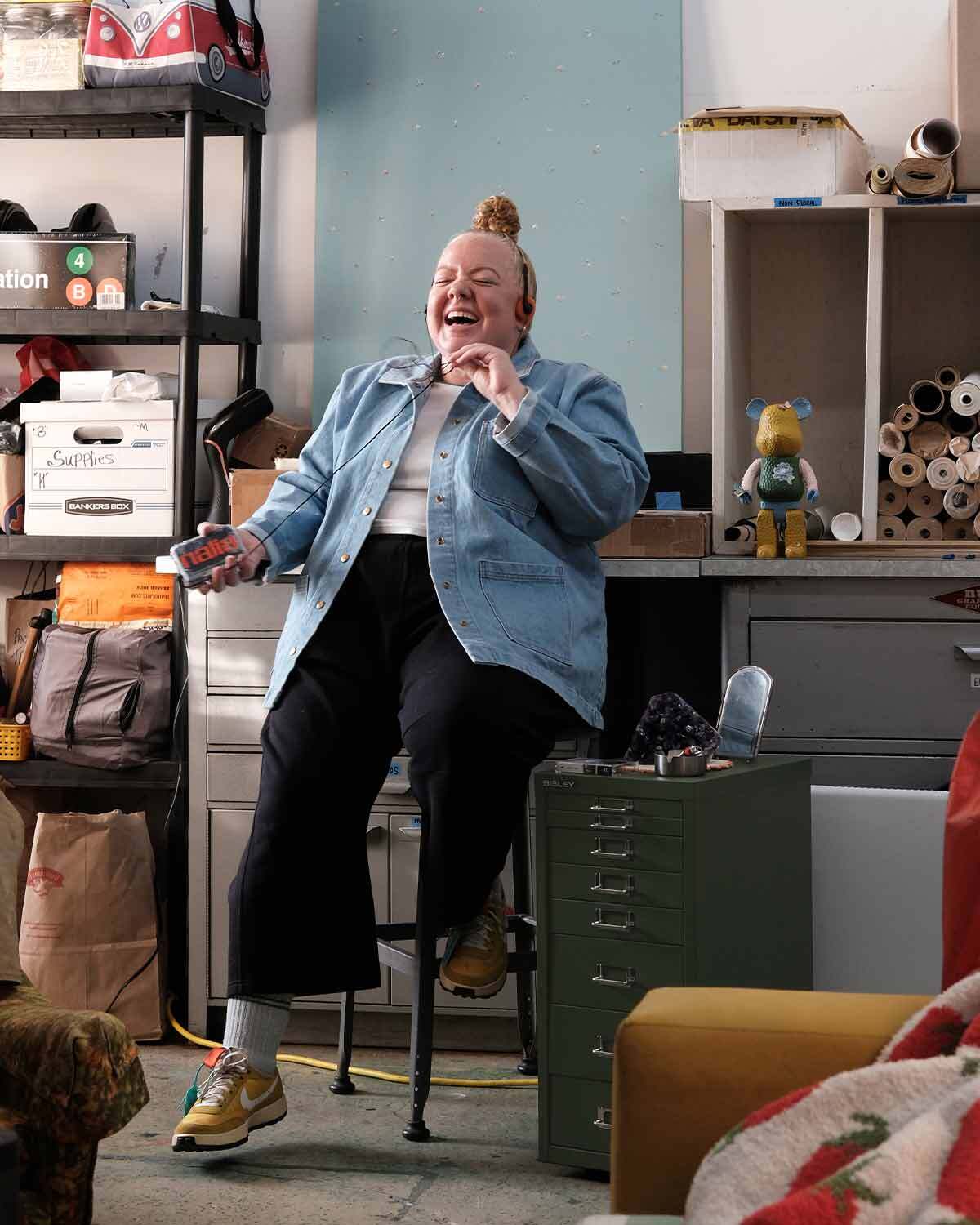
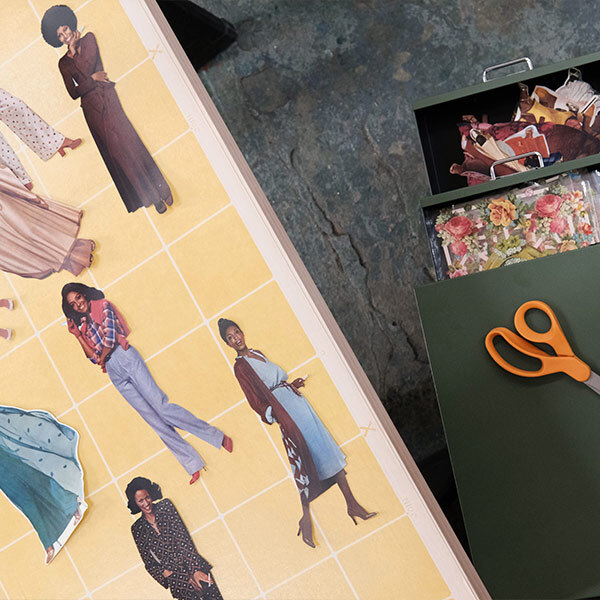
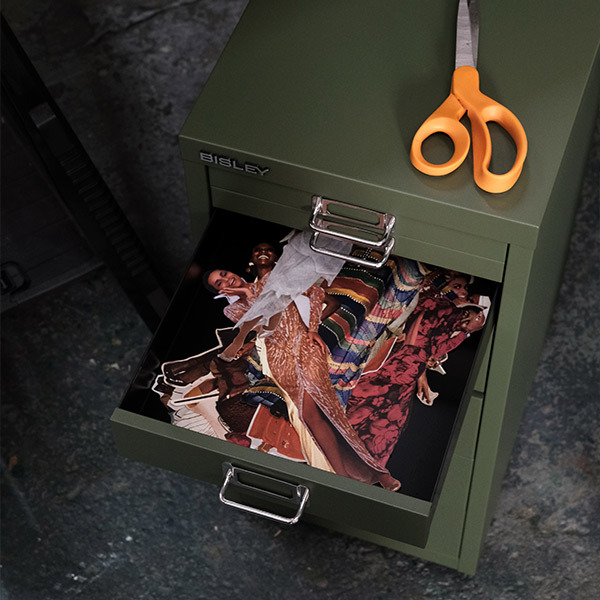
The line between organization and storage is personal for her. Growing up in a home filled with things, she developed a collector’s instinct — objects feel meaningful, necessary, charged. But that instinct can tip into overwhelm. Over time, she’s learned when to downsize, when to let materials move on, and when to give them a new purpose. Even storage, she says, needs to be organized — not to disappear, but to remain accessible, referenceable, alive for future work.
A successful studio day begins simply. Music sets the tone. Coffee follows. She makes a short list to clear the path toward the part of the day she values most: experimentation. Each step in her process feels like solving a problem or asking a deeper question. Wallpaper two panels so the next decision can reveal itself. Prepare the conditions so the work can surprise her.


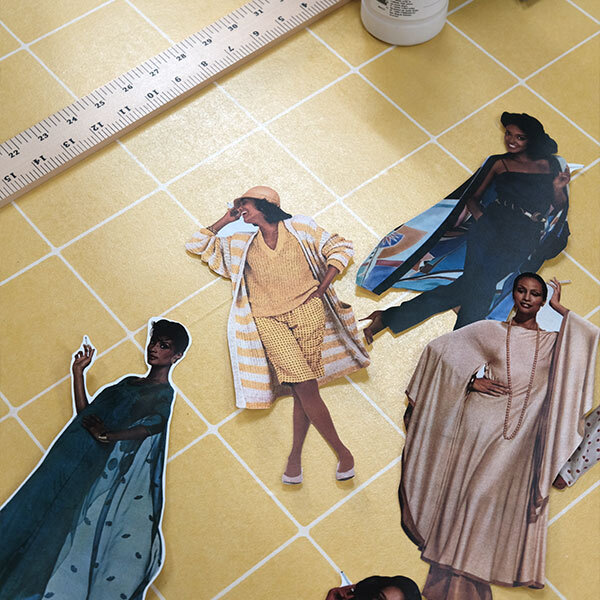
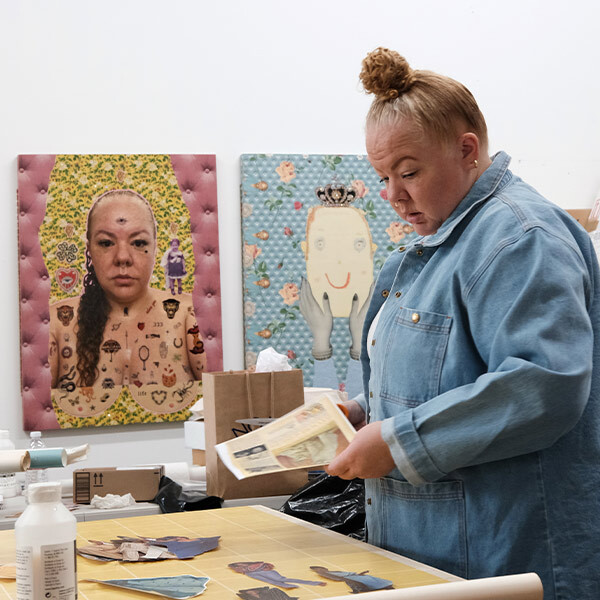
The studio is also a place of rest, observation, and everyday life. For Gaignard, there’s no clean separation between living and working. Pop culture, news cycles, Instagram scrolls — everything feeds the work. Her practice is rooted in examining what it means to live in America now, using materials from the past to suggest how much, or how little, has changed. The objects she works with carry their own histories, their own energy, and that weight becomes part of the finished piece.
Unplugging doesn’t look like escape. Instead, it’s about focus. Once she senses where the work is headed, she puts on headphones, lets the music carry her, and stops overthinking. She splits her time between New York and Massachusetts — work in one place, rest in another — but even in the studio, part of the process is simply sitting and looking. Waiting. Responding. Trusting instinct to signal the next move.
In Gaignard’s world, the studio isn’t just a site of production. It’s a place where work, life, memory, and material coexist — where organizing isn’t about control, but about making room for meaning.
From a collector's instinct to a practice built on negotiation, Genevieve shows how a studio shaped by material and meaning can hold a life's work. You can learn more about her practice by following her Instagram, and explore her work in print in the following publications: Reflection in Black (2000), We Are Here: Visionaries of Color Transforming the Art World (2021), Multiplicity : Blackness in Contemporary American Collage (2023), and Black American Portraits (2023).
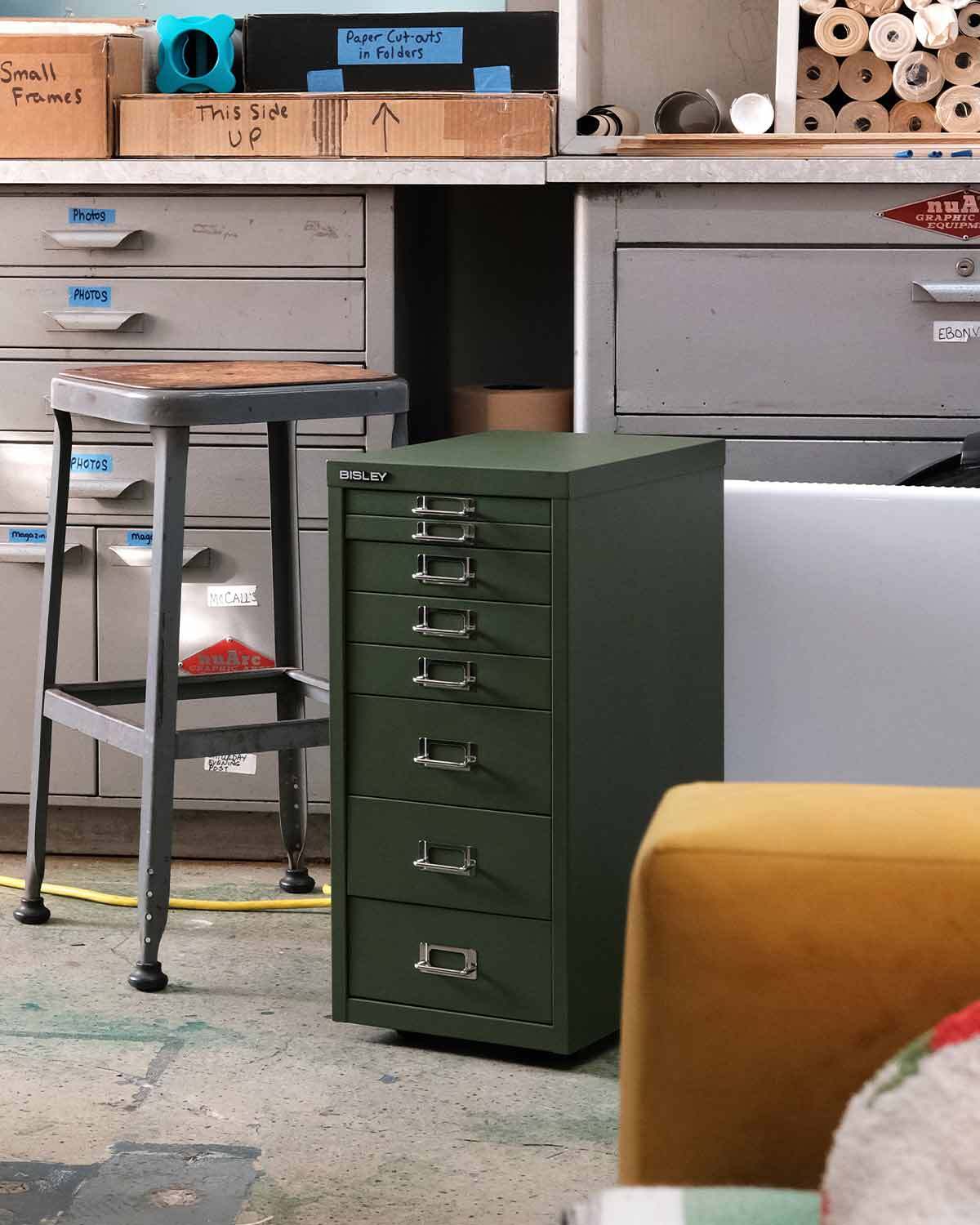
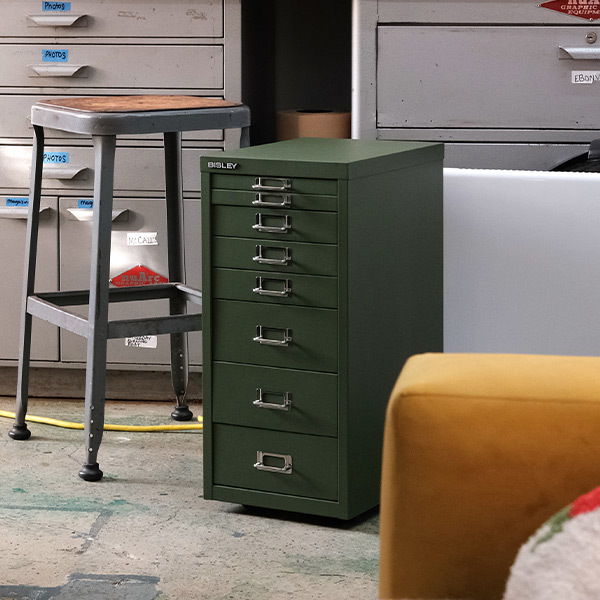
Genevieve uses an 8-Drawer MultiDrawer in Olive Green.
Three drawer heights make the MD8 a catch-all solution for art supplies of every scale. Add the caster base to keep your workflow flexible and mobile.