The Artist Files: Laura Manns
Posted by Bisley Store on Sep 21st 2026
The Artist Files looks inside the studios and systems behind working artists today. This chapter features Brooklyn-based puppet fabricator Laura Manns, in conversation about craft, organization, and the joy of building by hand. Presented courtesy of Laura Manns.
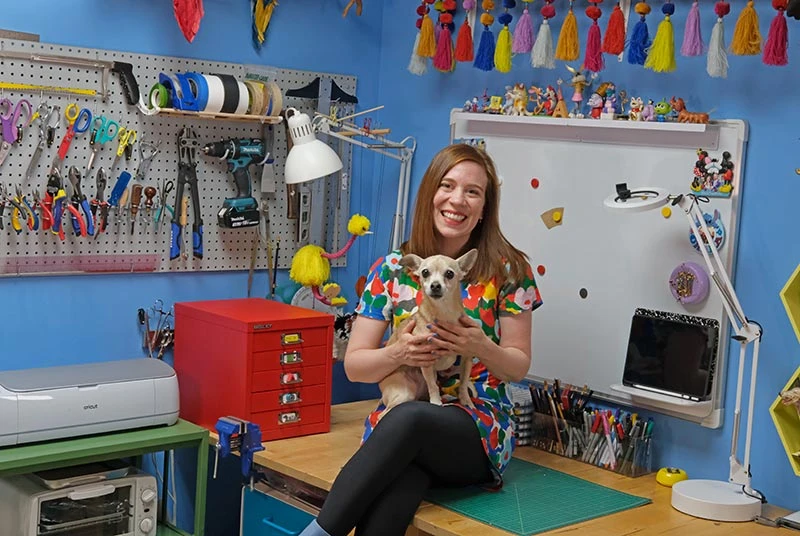
Laura Manns didn't grow up dreaming of becoming a puppet builder. She was a Disney kid who figured she'd become an animator. Art school didn't clarify things right away. She tried her hand at 2D animation and found it incredibly tedious. Then, she moved through electives trying to find her footing – oil painting, rug weaving, web design, whatever seemed interesting, until a stop-motion class cracked the whole thing open. She loved building the puppet. That realization opened the door to what would turn into her career – a two-time Emmy-winning puppet and prop builder. Now she works out of her studio in Gowanus, Brooklyn, and, on larger productions, inside the shops of bigger fabrication houses.
That distinction still shapes how she talks about the work. Puppet building, to her, is nearly every discipline at once: character design, sculpture, costuming, engineering, animation in a sense, and eventually collaboration; the moment a solitary object becomes part of a larger production. It's also, she notes, a small world. Once you're in it, you tend to stay.
Her studio runs on a rhythm she built for herself: tea first, a podcast or a show for background noise, her dog nestled comfortably on the armchair, then a to-do list she wrote for herself the night before, so she never arrives without knowing where to start. She paces herself deliberately. Unlike a lot of makers, she doesn't prefer to work under pressure, and she's arranged her days to avoid needing to.
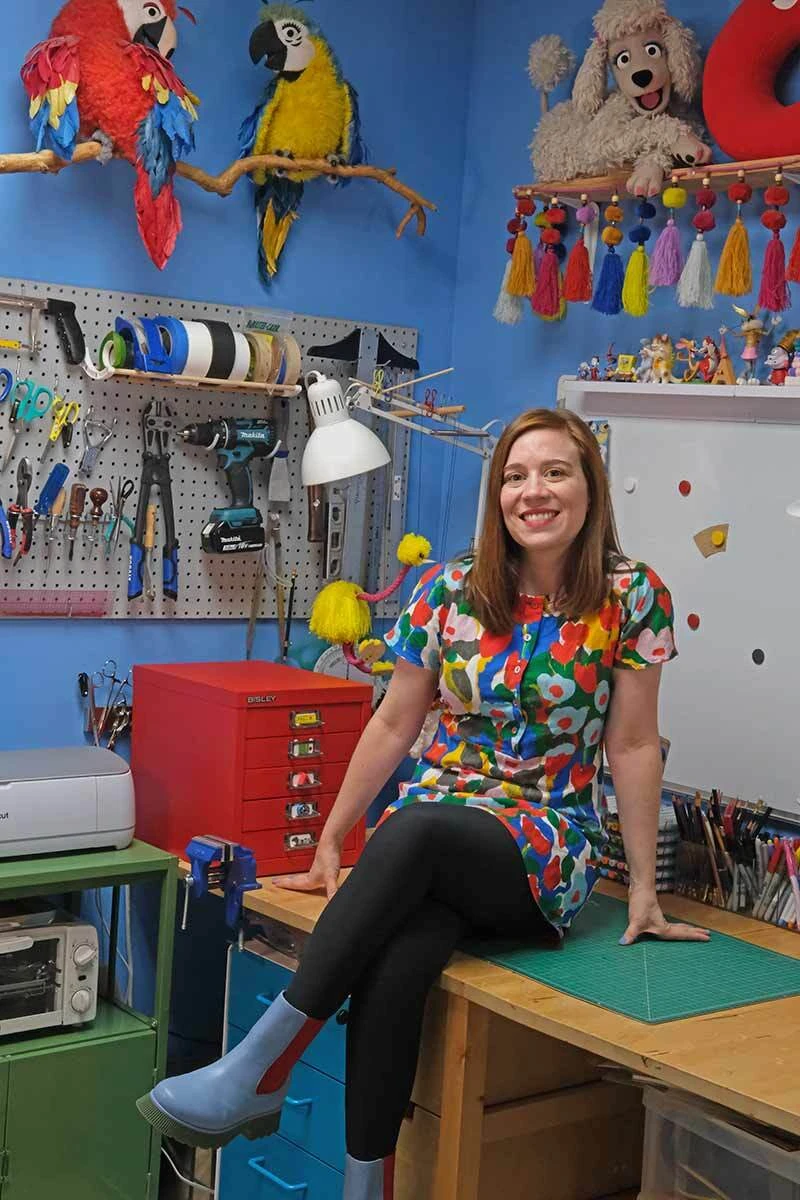
That doesn't mean the studio stays tidy. Manns is candid about the difference between organized and orderly. In the run-up to a deadline, especially one that's moved up, the space can turn over completely – materials out, systems temporarily abandoned in favor of getting the piece out the door. What matters to her isn't that everything stays in place at all times; it's that everything has a place to return to. At the end of a day, even mid-project, she'll do a mini reset, putting scissors and tools away even knowing she'll need them again tomorrow. A clear space, she says, reflects a clear mind. It's a version of making the bed: a small, repeated act of resetting that has less to do with efficiency and more to do with how it feels to walk back in.
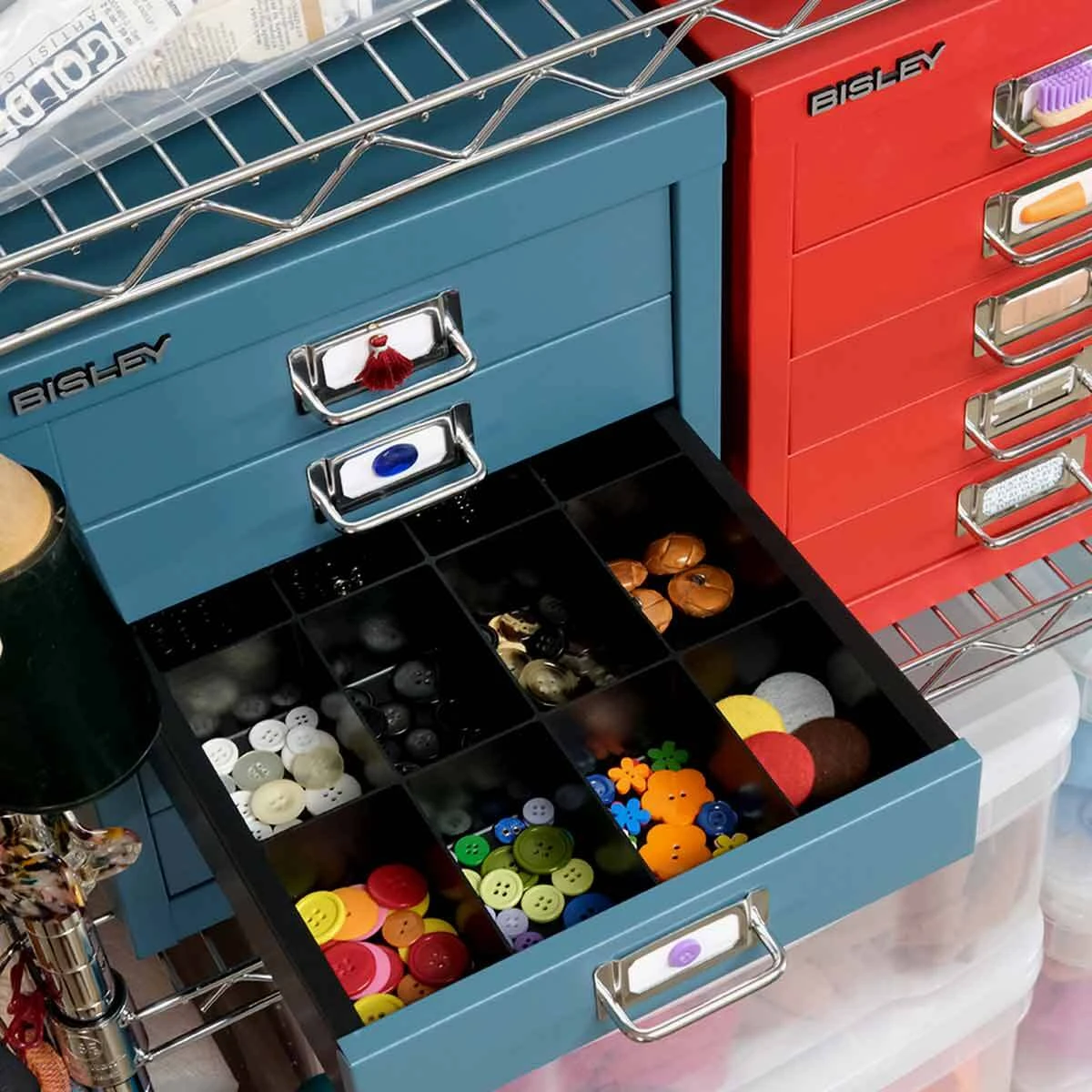
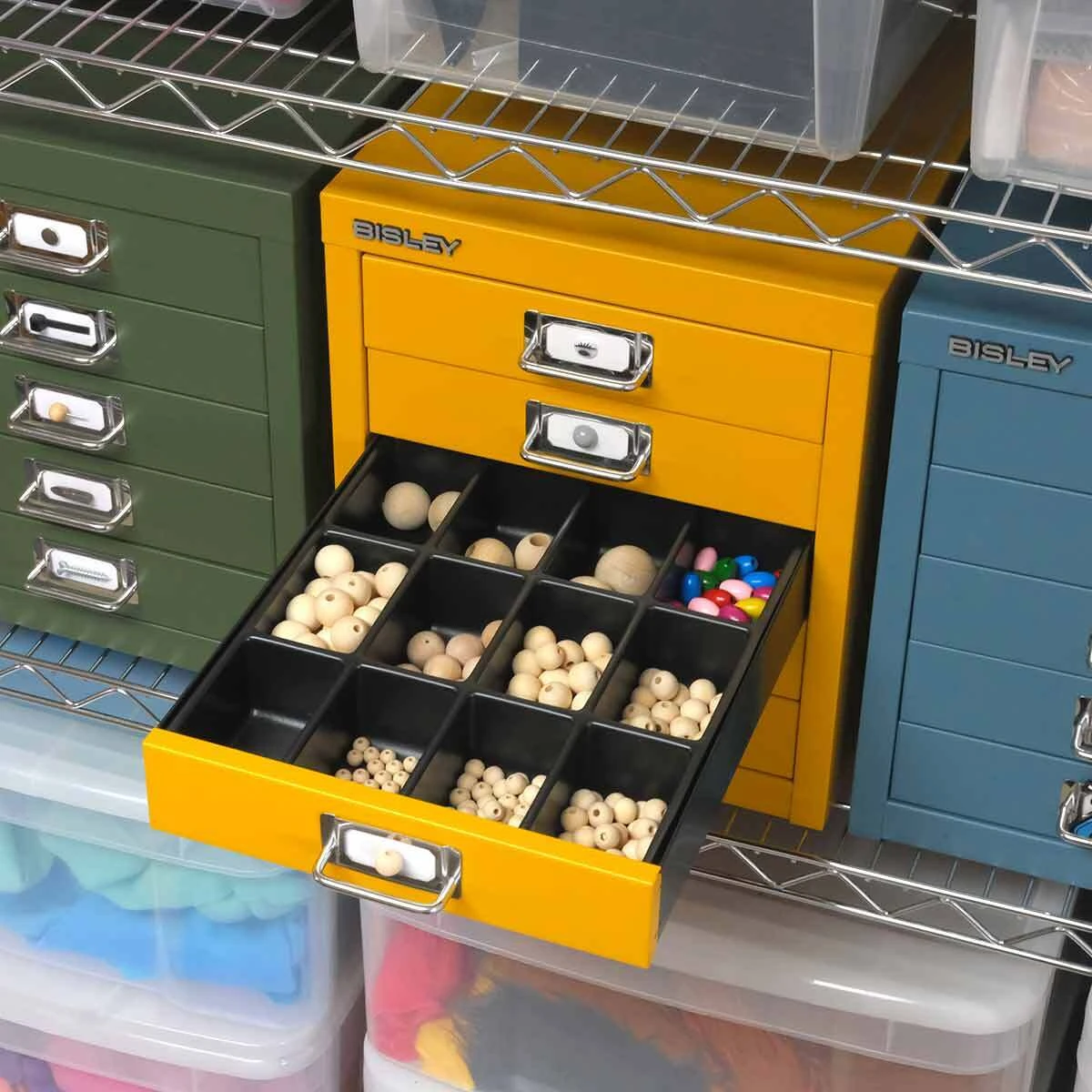
That instinct for order was shaped, in part, by thirteen years (and counting) at the Jim Henson Company, where she learned to build to a standard exacting enough for 4K television. It's also where she picked up her system: every material assigned its own drawer, and fabric subdivided by warm, cool, and neutral tones. She's brought that logic home, adapting it to a studio built around smaller containers and subdividers for the “doodads” that don't fit anywhere else. After eight years in the same studio, she knows where everything lives by sight, an inventory she describes as her own personal art store: stocked deep enough to pull from at a moment's notice, but never so full that it stops functioning.
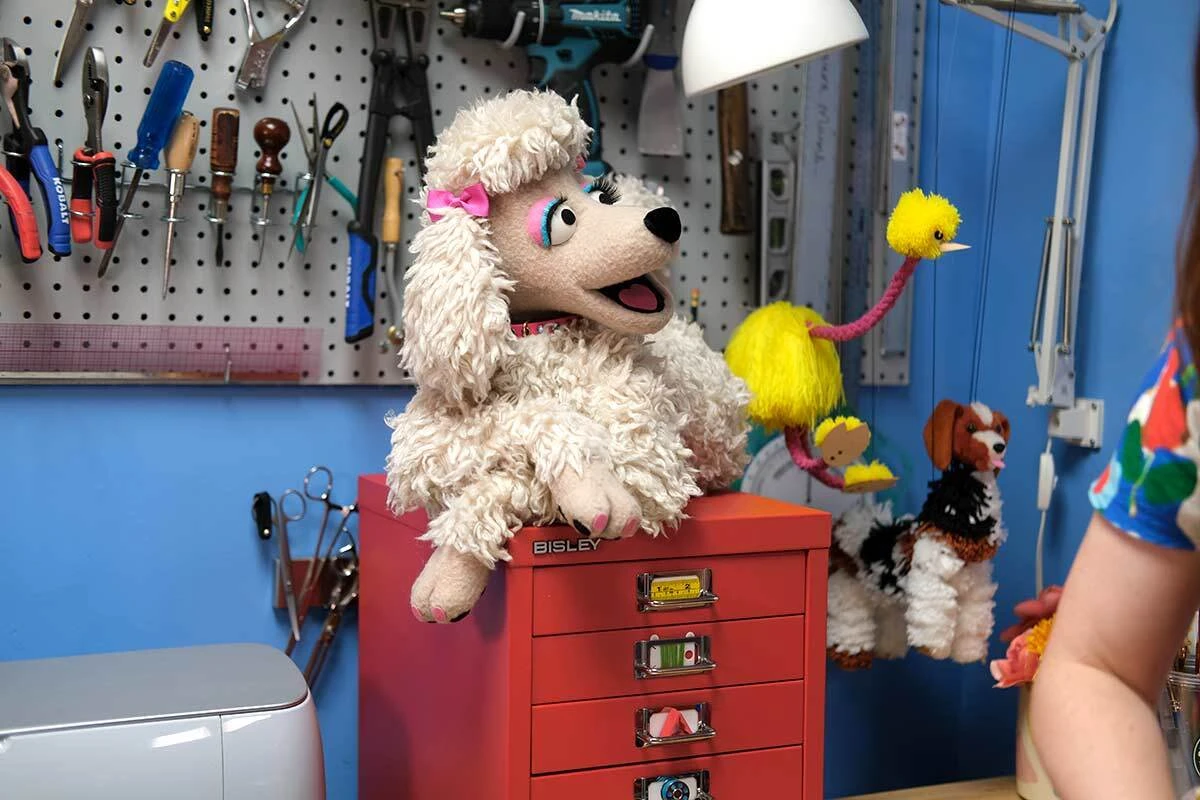
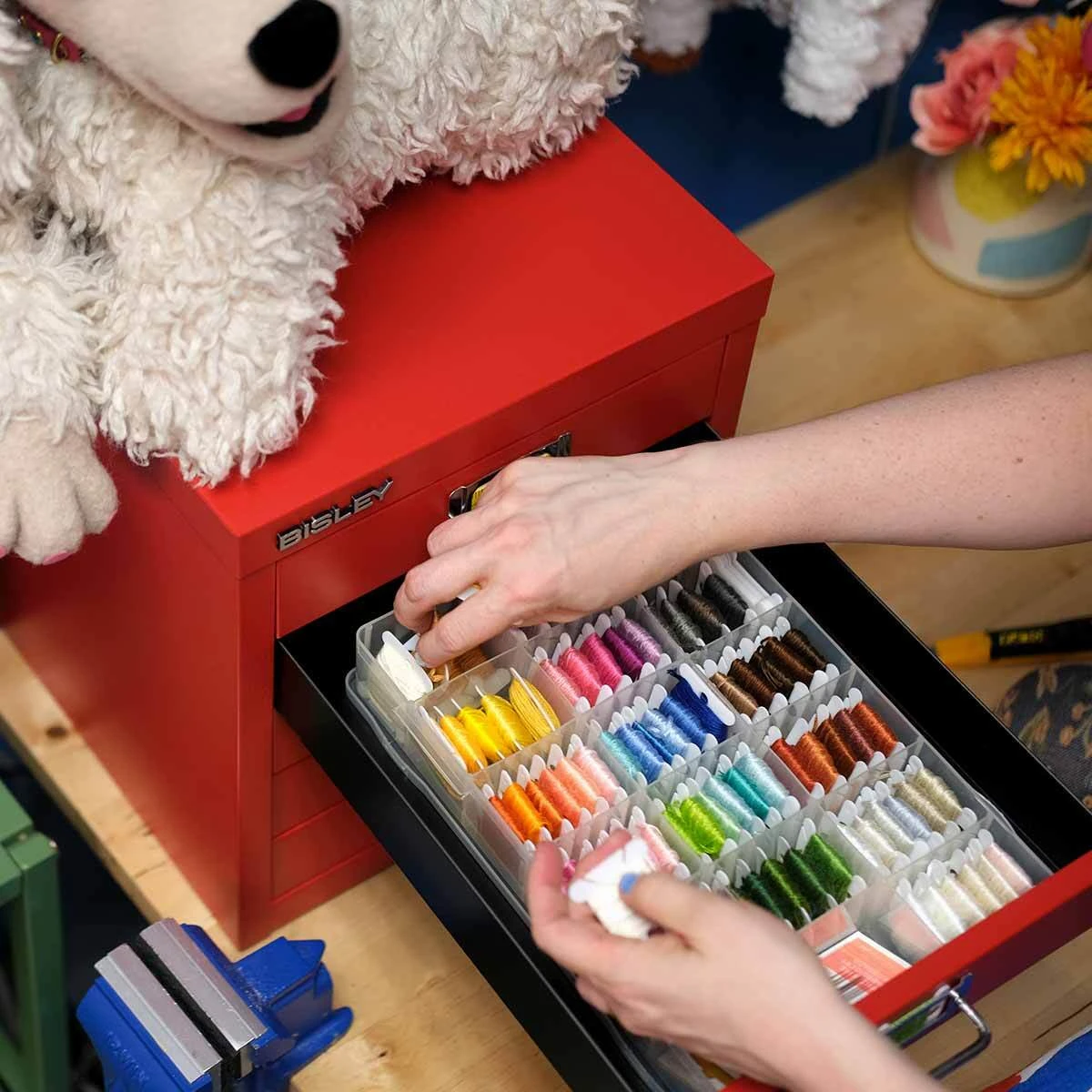
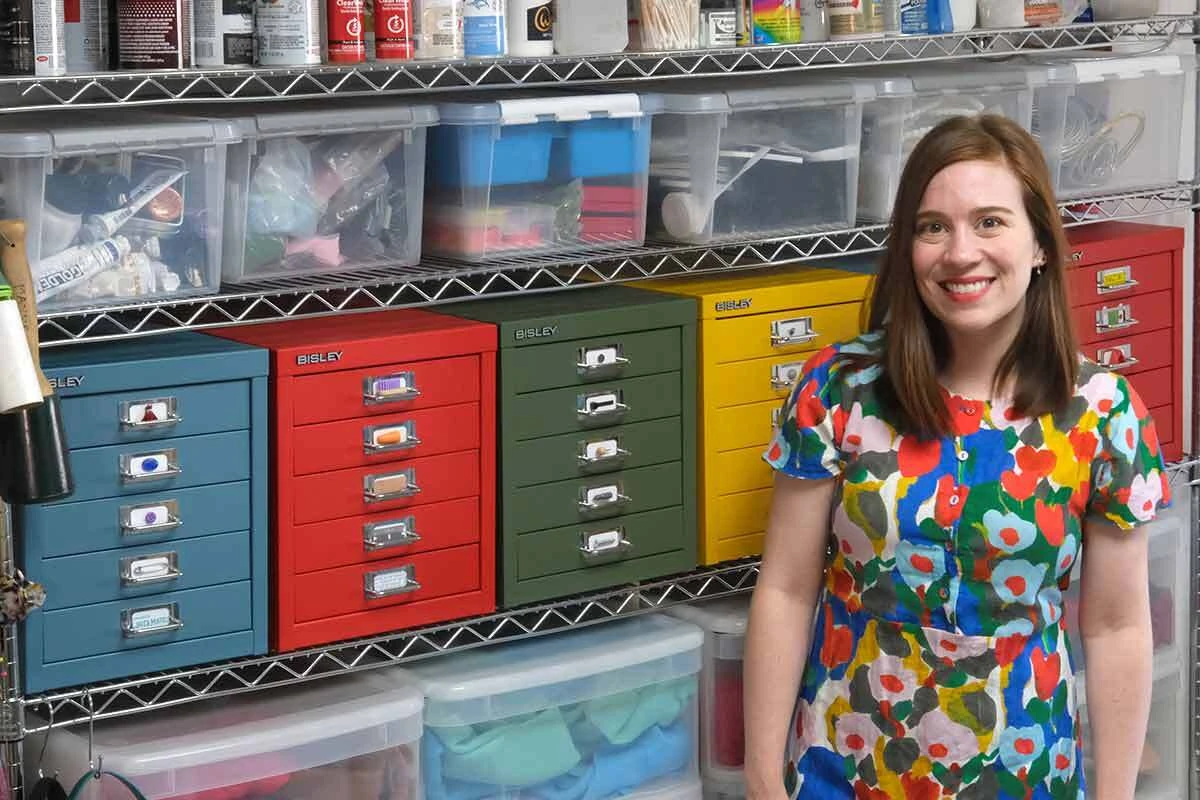
Color runs through all of it. The bins, the shelving, and the walls are deliberately, visibly bright, and Manns is direct about why: it makes her want to be there. She keeps her display shelves of collected objects and figurines spaced apart, nothing stacked or crowding, because visual clutter, she's found, works against her the same way physical clutter does. It's a small, specific kind of maintenance, tending a space so that its color stays a source of pleasure rather than noise.
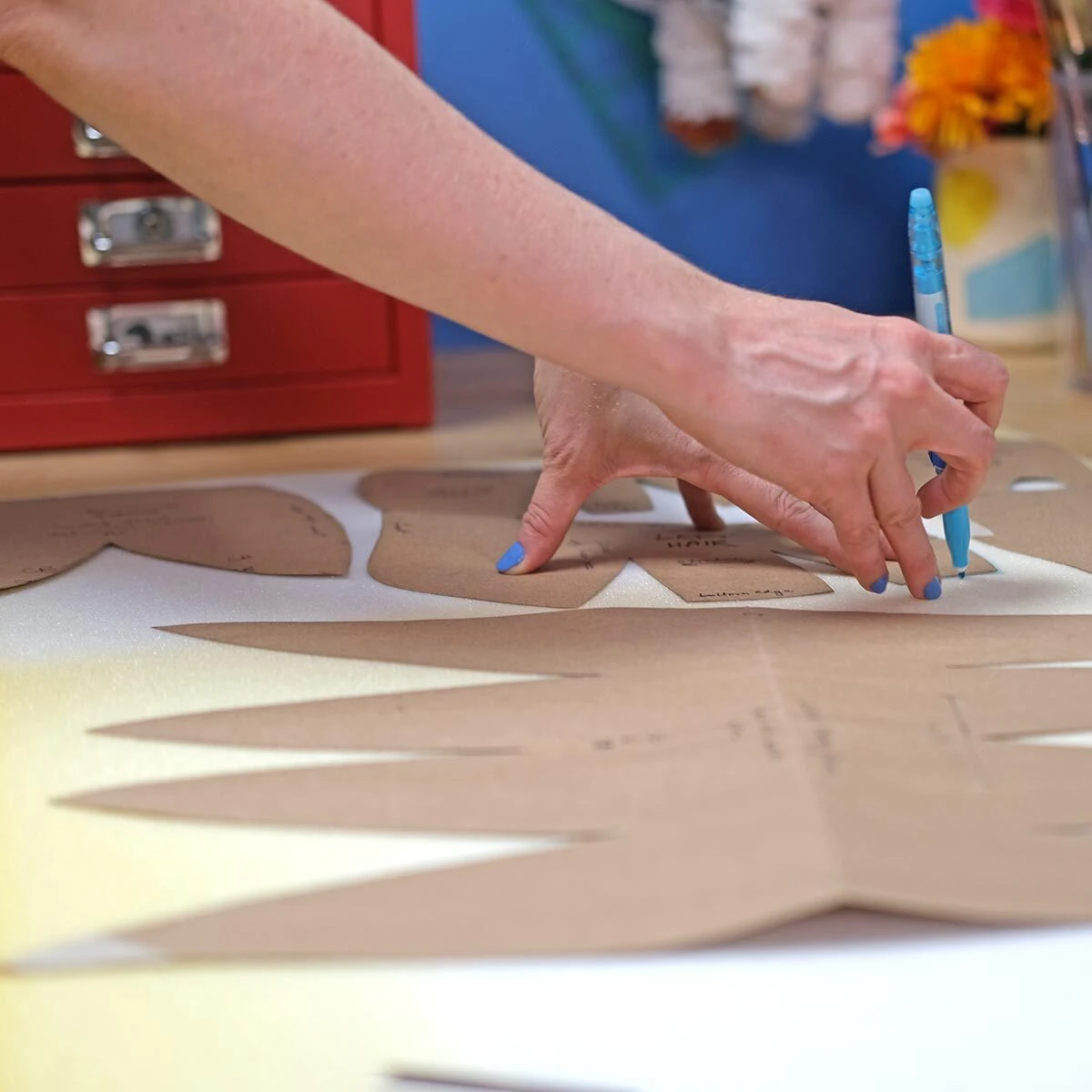
She's carried the same standard across very different kinds of jobs, from the Fraggle Rock reboot, built partly out of her own studio during a stretch of remote production, to Nickelodeon's puppet-built SpongeBob series, engineered entirely with practical mechanics, strings and pulleys, no digital shortcuts. What's changed since the analog era isn't her commitment to the craft; it's the record-keeping. At work, refurbishing an older puppet from the ‘80s can mean opening it up to find nothing more than aged foam “toast”, and occasionally no record of patterns. The industry standard has evolved since then, where record-keeping is essential for posterity. Manns documents everything she builds and restores, in enough detail that she can hand a project to another builder, or return to it herself years later. She recently built a duplicate Duolingo owl she'd first made in 2022, working from her own patterns and notes, written for a version of herself she couldn't yet know she'd need.
From a to-do list written the night before to a drawer system carried home from a network studio, Laura Manns shows how a space built for color and order can hold both whimsy and precision at once. You can learn more about her work at lauramanns.com and on Instagram at @lauramanns.
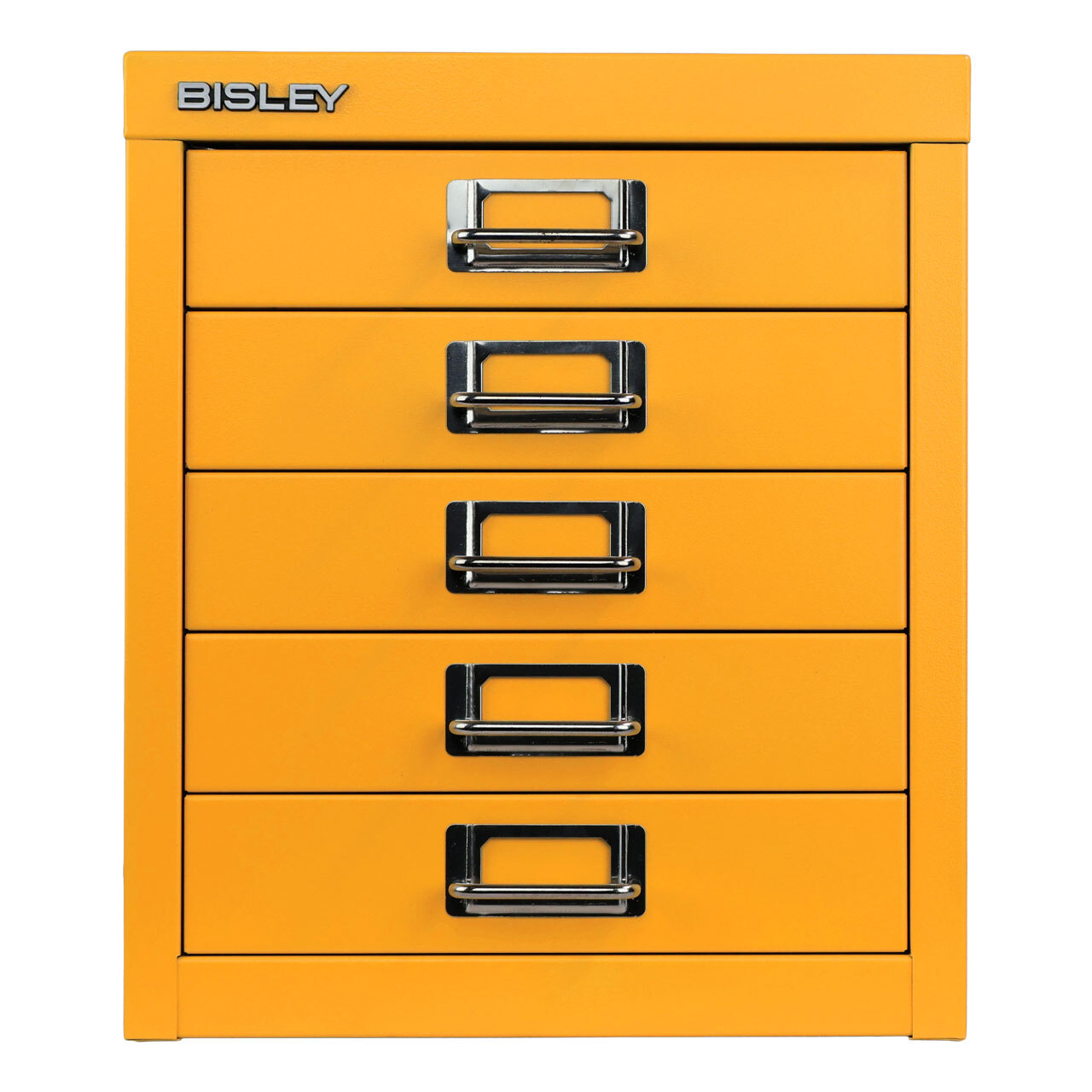
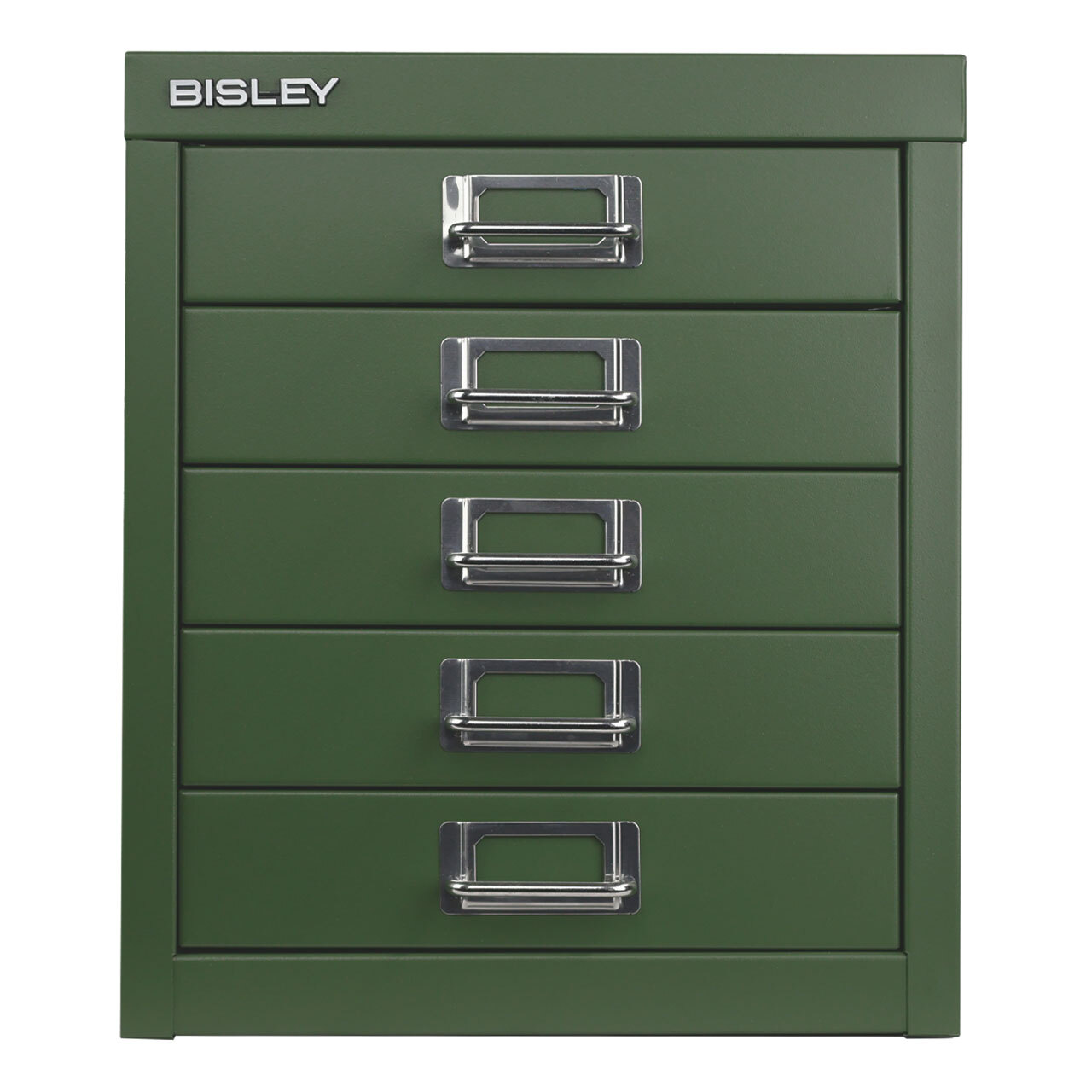
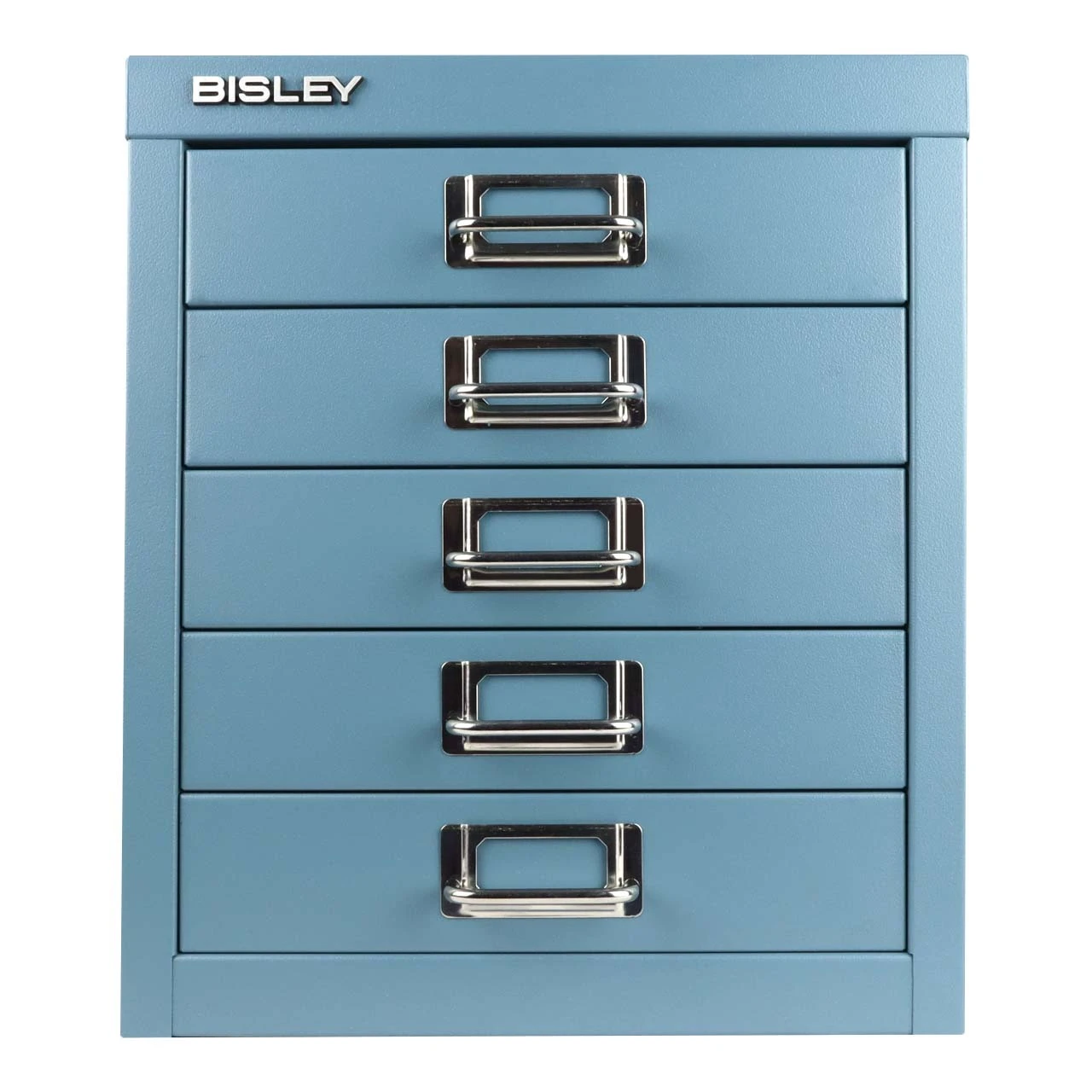
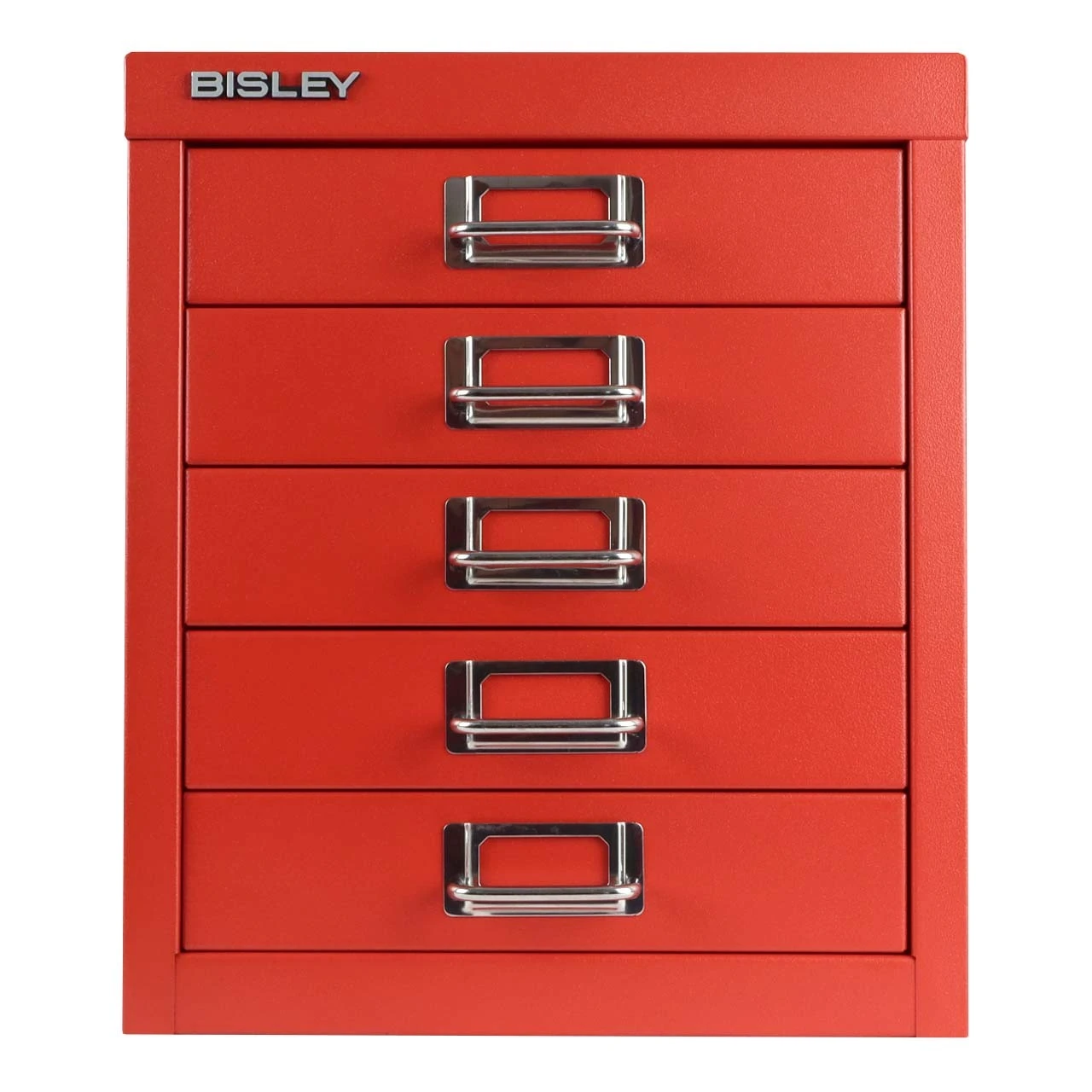
Laura Manns uses six 5-Drawer MultiDrawer units to organize her studio's smaller materials, sorting doodads and notions into a system where a piece of the actual material serves as the label. Seen in Golden Sunflower Yellow, Olive Green, Doulton Blue, and Cardinal Red!