The Artist Files: Robert Pruitt
Posted by Bisley Store on Jan 12th 2026
The Artist Files looks inside the studios and systems behind working artists today. This chapter features Bronx-based artist Robert Pruitt, in conversation about space, process, and rhythm. Presented courtesy of Robert Pruitt.
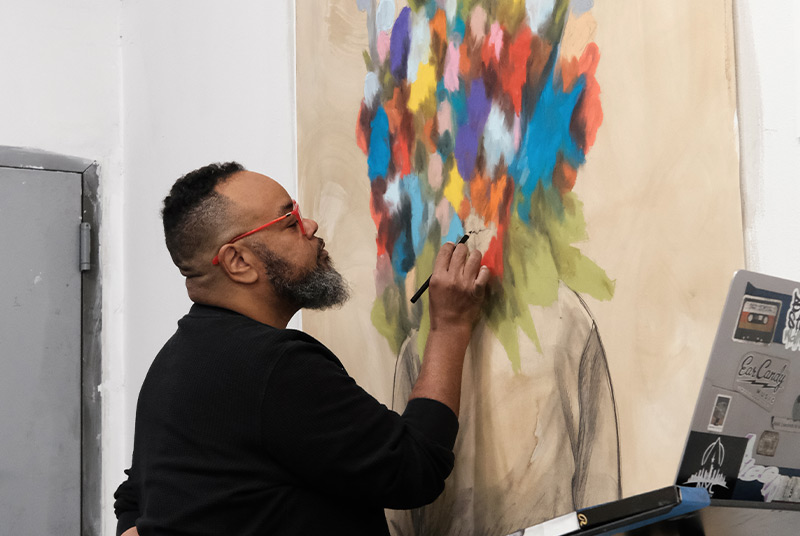
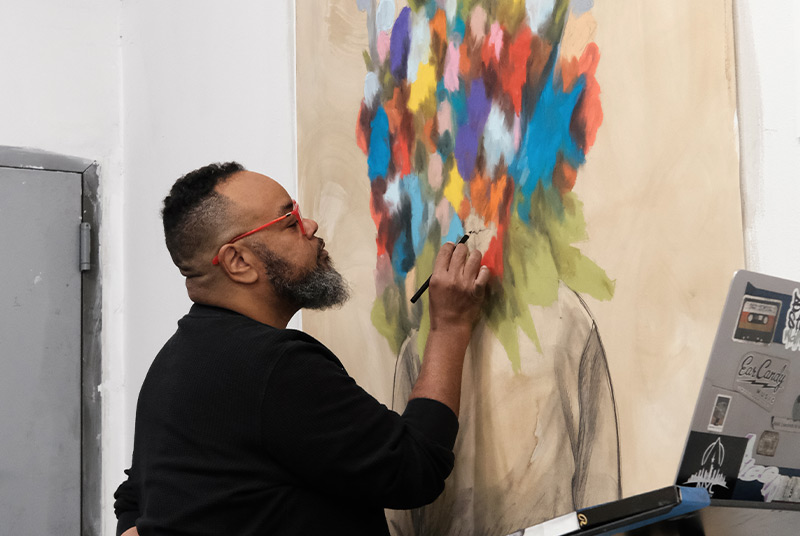
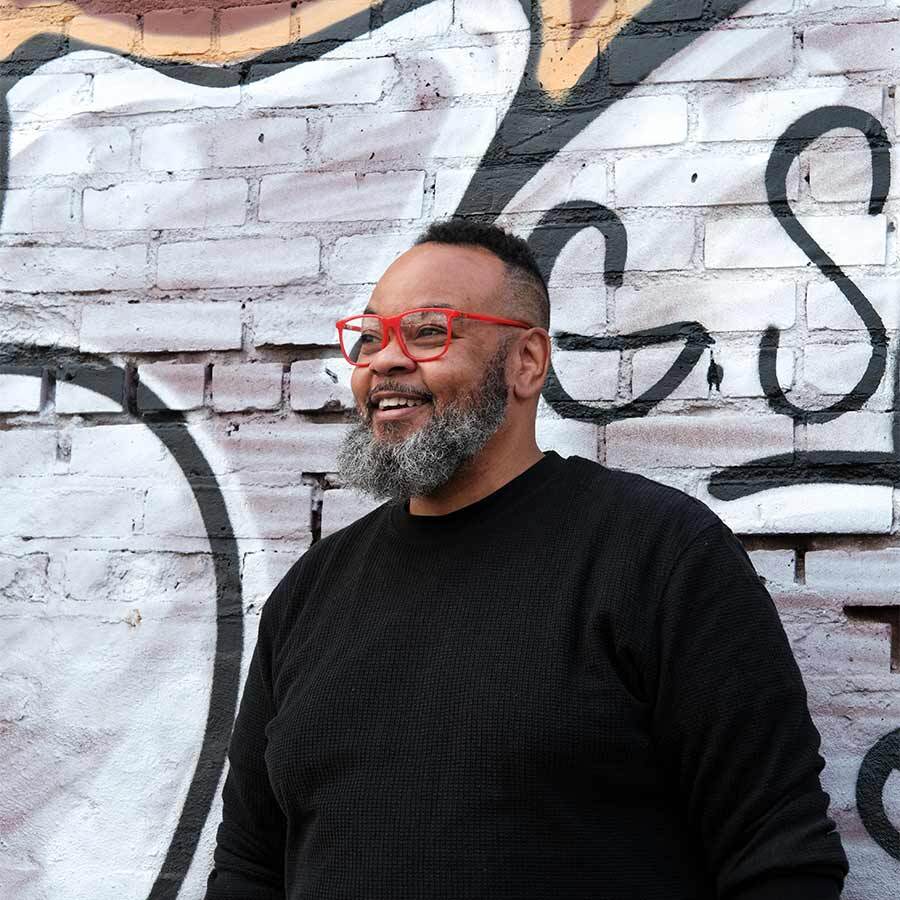
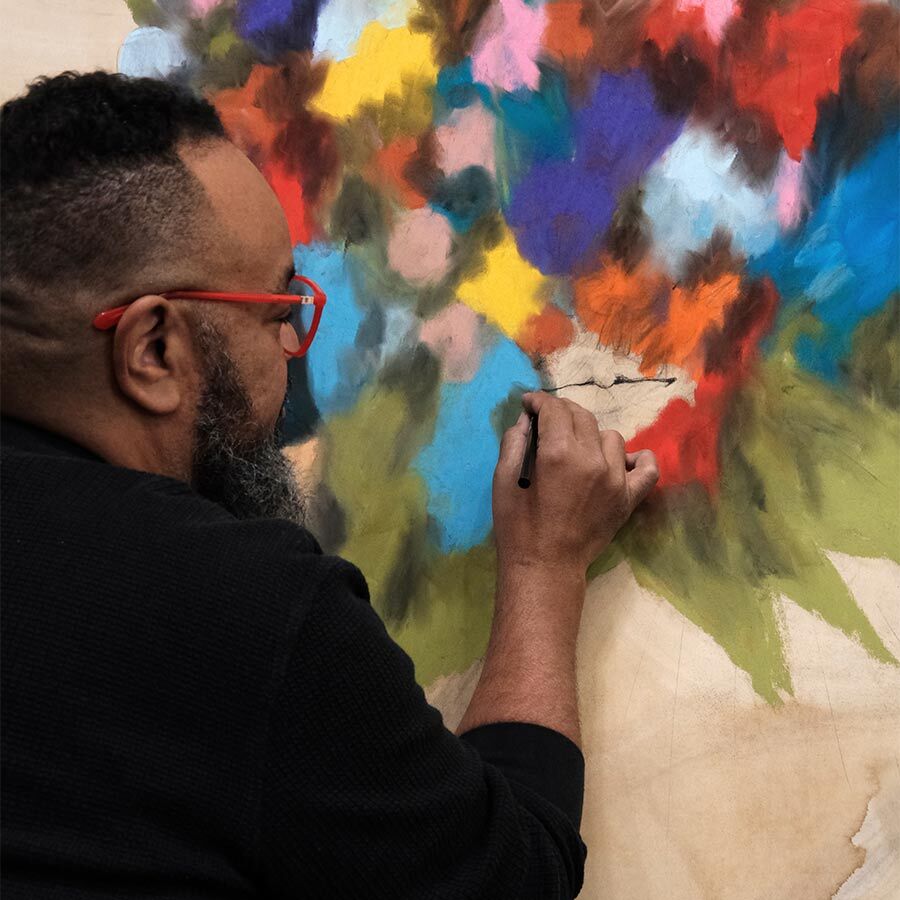
Robert Pruitt is an artist whose drawings hold both intimacy and scale — figures rendered with humanity, imagination, and cultural weight. His practice lives in the intersection of science fiction, everyday life, and the Black experience, pulling from music, comics, ritual, and history to create images that feel both grounded and surreal. Materials are humble, but handled with intention, giving the work a sense of gravity — like something discovered, not just made. The studio is where that building begins.
There’s a quiet rhythm to the way Pruitt enters that space — not with urgency, but with transition. Before the work begins, there is music, sweeping, and time spent at the computer. A slow deceleration from the outside world into something more interior. The studio becomes an incubator, and the work doesn’t start with materials — it starts with presence.
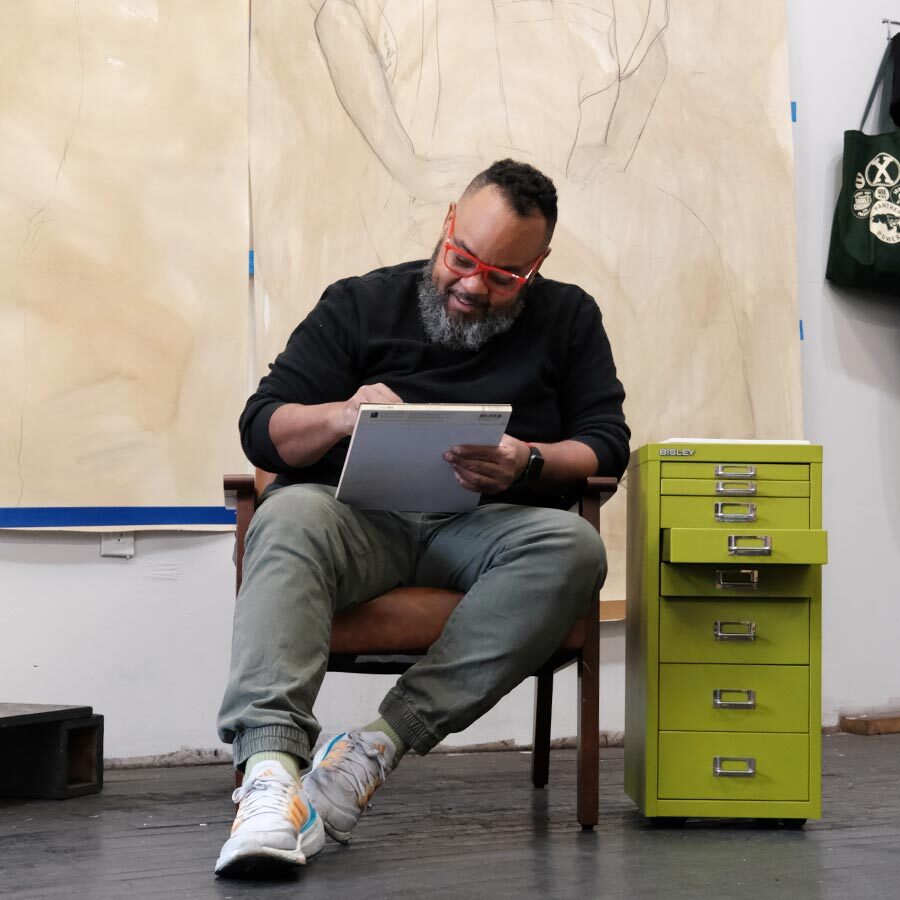
Pruitt works large, often constructing drawings through dyed sheets of paper and an intuitive relationship with the wall. Tables fold away and return when needed; rolls of paper wait to be cut, dyed, dried, then pinned up to become the bones of a new piece. While he insists he isn't organized in the traditional sense, he’s built a system learned through doing — a choreography of tables, paper, and tools that allows him to move without thinking. Organization, for him, is less about order and more about access. Things should be where the hand reaches naturally.
When asked what organization looks like to him, Pruitt paused. “If I had to define it,” he said, “it’s easy access without thinking.” It’s not minimalism or neatness — it’s removing friction. In teaching painting, he learned how placement matters: where brushes sit in relation to the surface, how the body moves between looking and mark-making, and how clutter interrupts the process. Remove unnecessary motion, and only the creative act remains. He talks about it like a dance — the goal is to never break the rhythm.
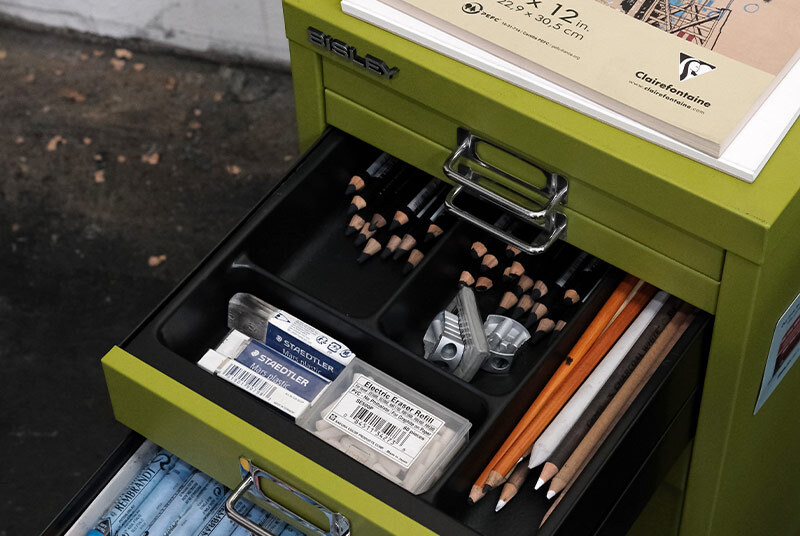
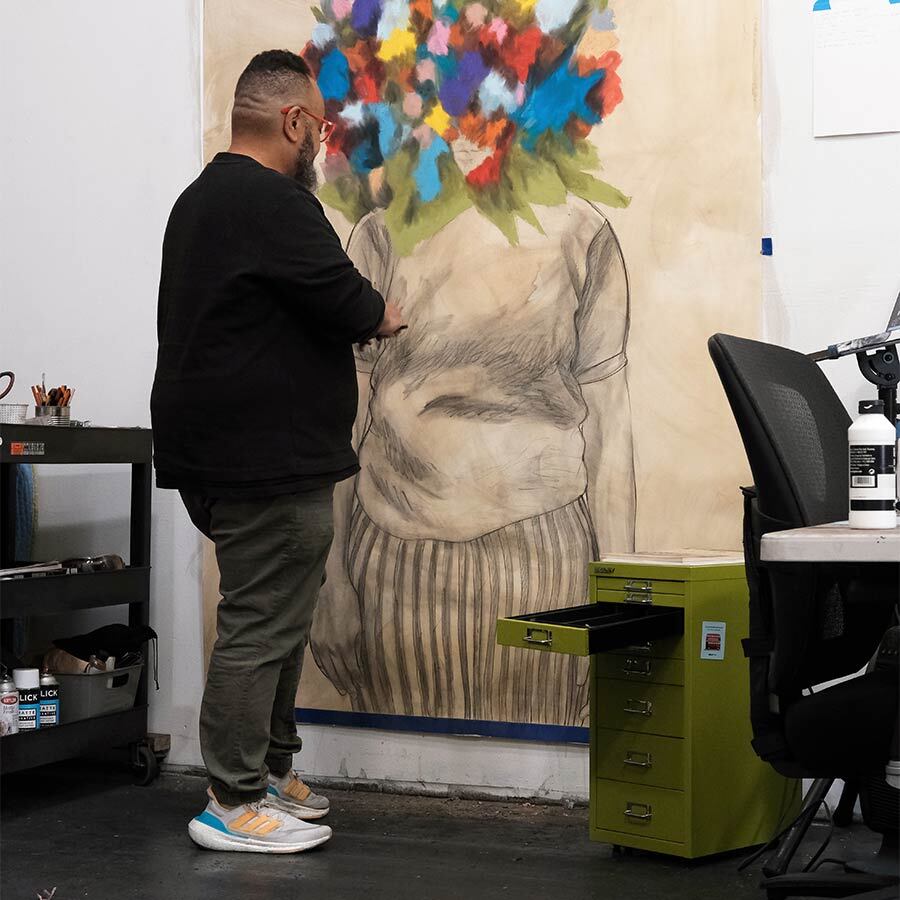
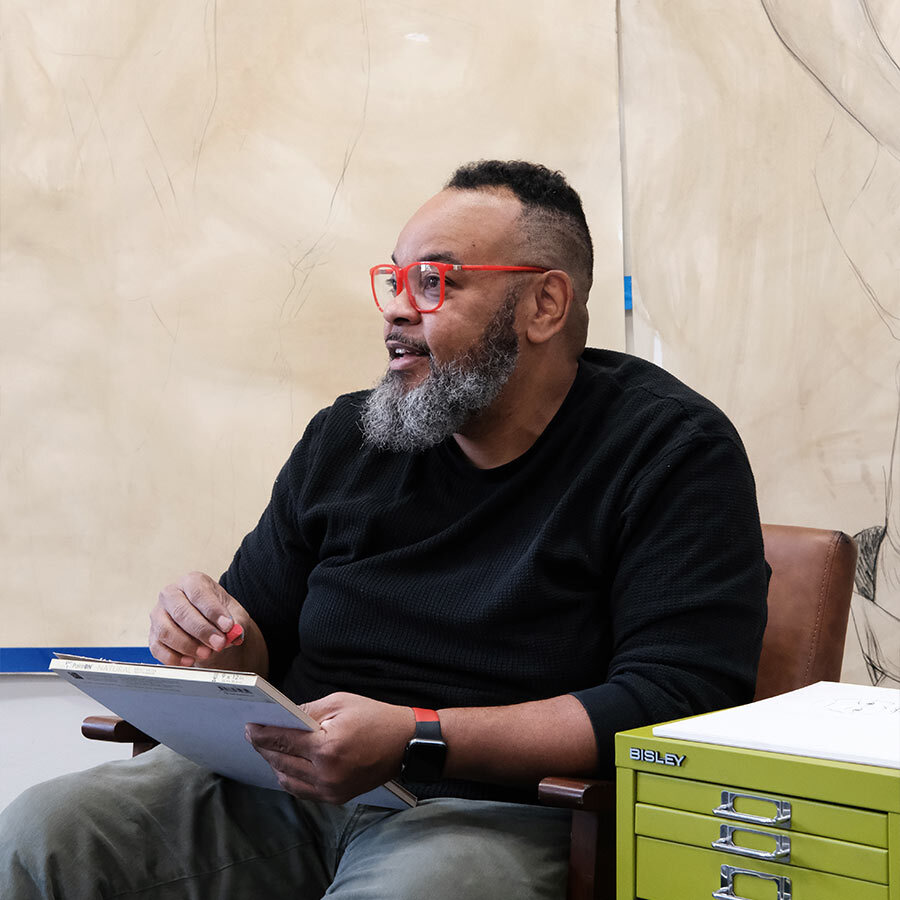
Efficiency came slowly. One story he shared: for years he tacked drawings directly to the wall until they tore. Only decades later did he begin taping both sides — a small, hard-earned solution. Reference materials are the same — for now they live in trays for easy viewing, but the future poses questions: how does one move a visual archive to a new studio without losing it, physically or creatively? He doesn’t have the answer yet. What he knows is that he needs to see things. Storage is useful only when it doesn’t hide what matters.
And what does he demand of a workspace? Wall space. Distance. Room for perspective. Movement matters more than tidiness — the studio must hold energy. It’s less about perfect order, and more about maintaining flow.
From ritual and rhythm to hard-earned efficiencies, Robert shows how a studio shaped by movement and access can keep the work alive. You can learn more about his practice at robert-pruitt.com, and explore his work with Salon 94 and Vielmetter Los Angeles.
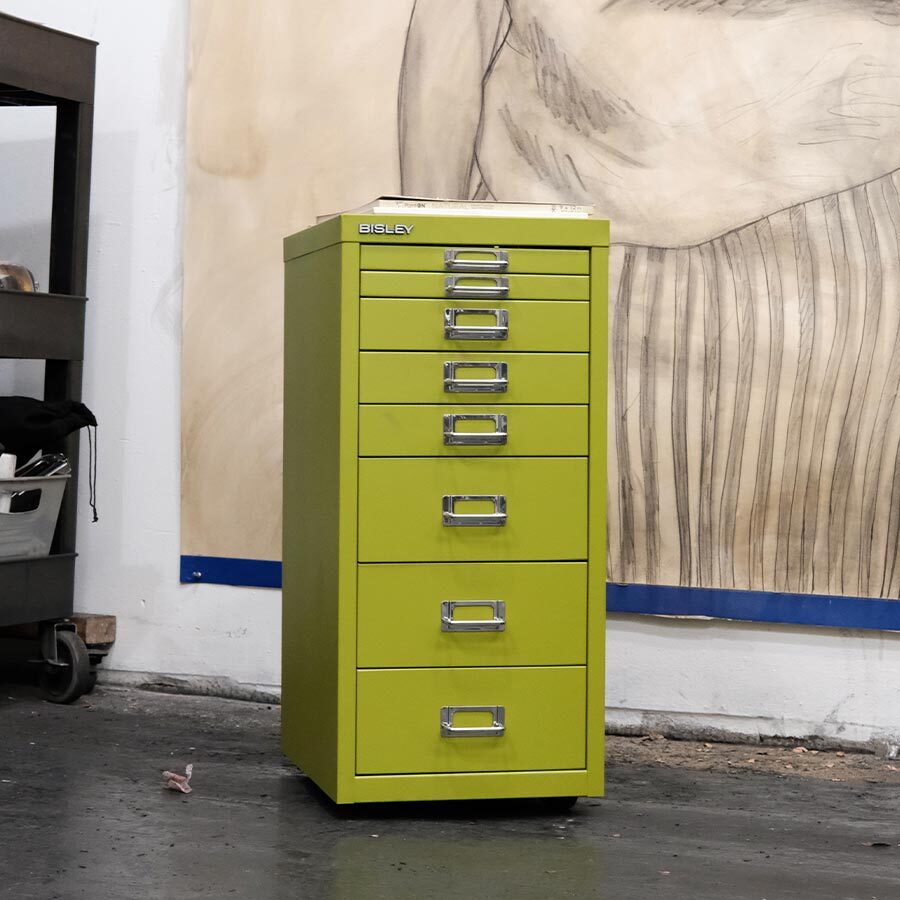
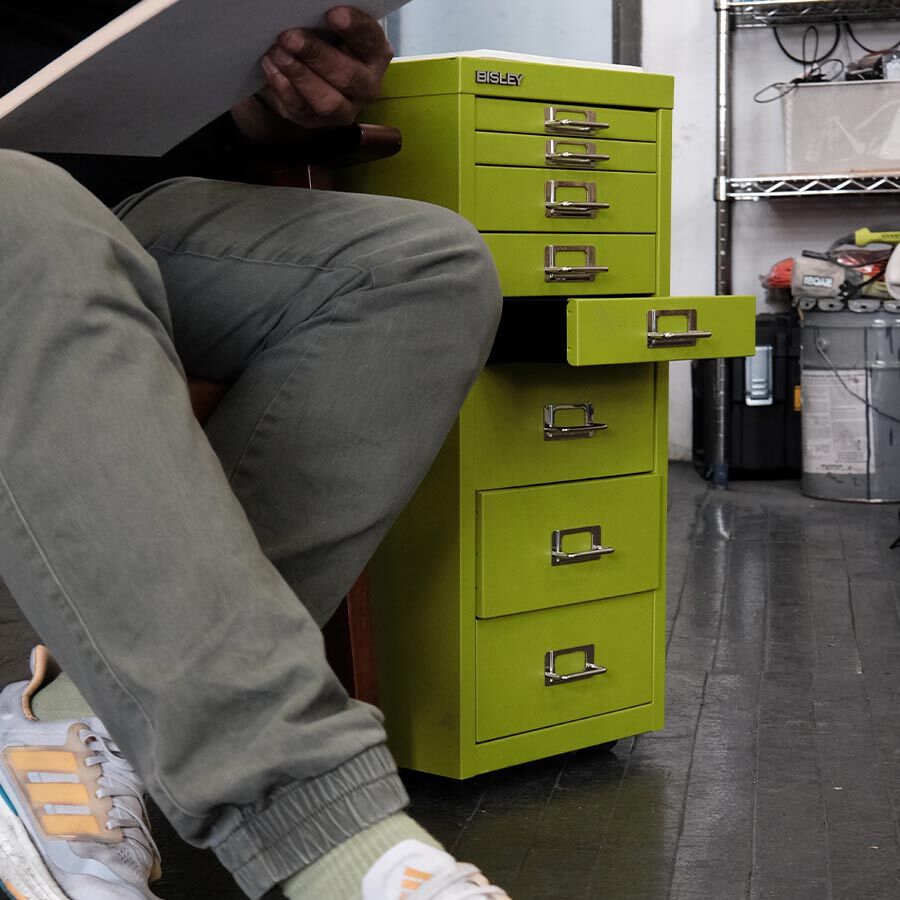
Robert uses an 8-Drawer
MultiDrawer in Bisley Green.
Three drawer heights make the MD8 a catch-all solution for art supplies of every scale. Add the caster base to keep your workflow flexible and mobile.